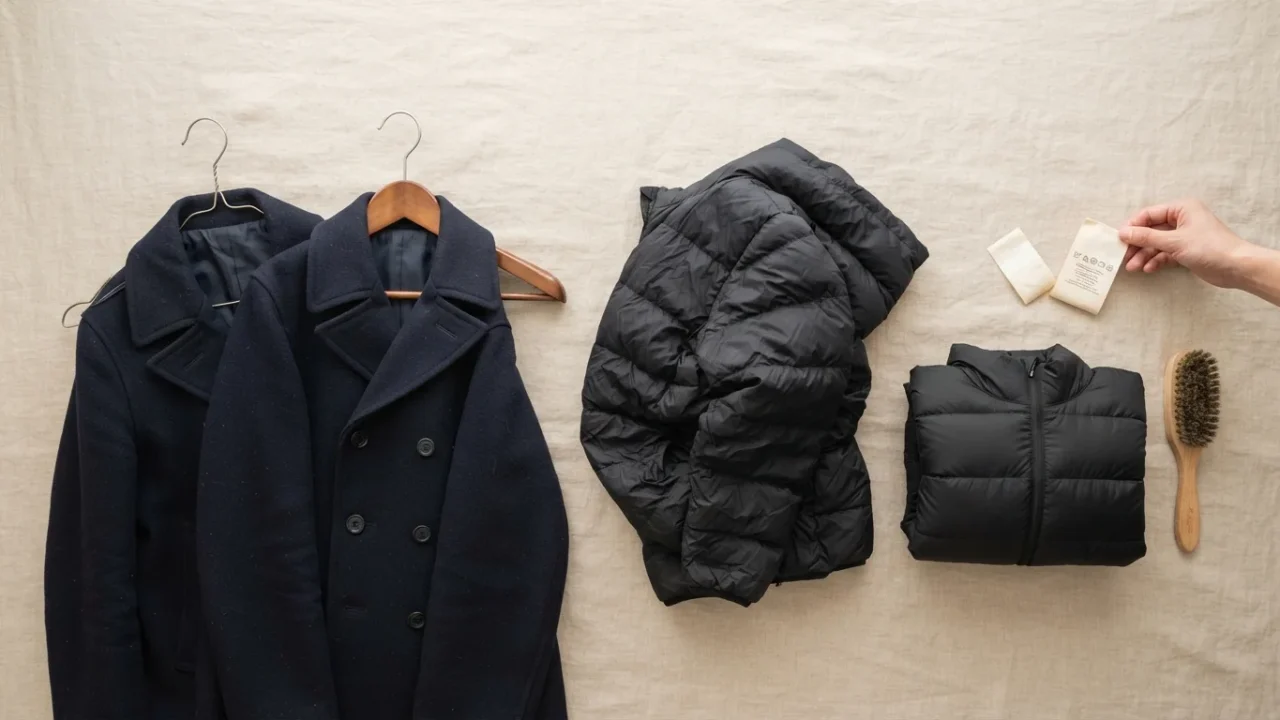
Most people don’t ruin a good jacket in one dramatic moment. They wear it down through small habits that seem harmless: hanging it the wrong way, washing it with the wrong detergent, buying a size that looks right in the mirror but feels wrong on the street. The good news is that almost all of these mistakes are easy to fix once you know about them. This guide walks through the most common ones and what to do instead, so your outerwear performs better and lasts longer.
In this guide
- Buying for Looks Alone
- Choosing the Wrong Size
- Ignoring Your Climate
- Layering the Wrong Way
- Misreading Waterproof Labels
- Washing Coats the Wrong Way
- Storing Coats Badly
- Skipping Small Repairs
- Wearing a Coat Past Its Prime
- Forgetting the Details That Keep You Comfortable
- A Quick Checklist to Avoid These Mistakes
- Final Thoughts
Buying for Looks Alone
It’s easy to fall for a coat because of its color or its cut, then discover in the first cold week that it doesn’t keep you warm or dry. Looks matter, but a coat is also a piece of equipment. Before you buy, ask what weather you need it for and whether the fabric and construction suit that weather. Our guide on how to spot a high-quality coat before you buy lists the details worth checking, from stitching to lining.
Choosing the Wrong Size
A coat that fits perfectly over a t-shirt in the store can feel tight once you add a sweater. Going too big has its own problems, since extra fabric lets cold air in and looks sloppy. The fix is simple: try coats on with the layers you actually wear in winter, then move around. Reach forward, raise your arms, and sit down. If the coat pulls, rides up, or restricts you, try another size.
Ignoring Your Climate
A heavy down parka is wonderful in a dry deep freeze and miserable in a mild, damp winter. A thin shell is great in drizzle and useless in real cold. Matching the coat to your climate saves money and discomfort. If you’re unsure which materials suit your weather, our guide to choosing outerwear fabric for different climates is a good starting point.
Layering the Wrong Way
Layering is one of the best ways to stay comfortable, but it’s easy to get wrong. Wearing cotton against the skin traps sweat and leaves you cold once you stop moving. Piling on thick layers can make you overheat and sweat, which makes you colder later. A thin moisture-managing base, a warm mid layer, and a protective outer layer work better, and our guide on building the perfect outerwear wardrobe explains each layer’s job.
Misreading Waterproof Labels
Many people assume “water-resistant” means “waterproof,” then get soaked in the first real rain. The two terms describe different levels of protection. Check for sealed seams and a rating if you need real rain protection, and don’t expect a light-duty jacket to handle a storm. Our guide on waterproof vs water-resistant jacket ratings shows how to read the labels.
Washing Coats the Wrong Way
Washing mistakes are among the most damaging. Regular detergent and fabric softener can leave residue that harms the water repellency of technical jackets. High heat can damage insulation and coatings. Down needs gentle care, and good drying to restore its loft, and for more background on how this natural insulation works, see this overview of down feathers. Always follow the care label, and don’t wash a coat more often than it needs. Our guide on how often to dry clean a winter coat helps you judge when cleaning is really necessary.
Storing Coats Badly
Hanging a heavy coat on a thin wire hanger stretches the shoulders and leaves bumps. A wide, sturdy hanger supports the weight properly. Stuffing a puffer into a tight bag for months compresses the fill, and storing a damp coat invites mildew. Put coats away clean and fully dry, in a cool, dry place, in a breathable garment bag. Our guide on transitioning your coat wardrobe between seasons covers the full routine.
Skipping Small Repairs
A loose button, a tiny tear, or a sticky zipper rarely stays small. Left alone, they get worse and sometimes lead to a coat you can no longer wear. Fixing small problems early costs little, while ignoring them can shorten a coat’s life by years. Our coat care guide covers the everyday habits that prevent these problems in the first place.
Wearing a Coat Past Its Prime
The opposite mistake is hanging on to a coat that no longer does its job. If you’re cold in a jacket that used to keep you warm, or the lining is shredding and the waterproofing has failed, it may be time to move on. Our guide on the signs it’s time to replace your outerwear can help you decide.
Forgetting the Details That Keep You Comfortable
Even a great coat can’t make up for cold hands, an uncovered neck, or damp feet. A hat, gloves, and a scarf make a big difference, and so do good socks and footwear. These are easy to overlook when you’re focused on the coat itself, but they often decide whether a winter day feels comfortable or miserable.
A Quick Checklist to Avoid These Mistakes
- Buy for your climate and your daily routine, not just for looks.
- Try coats on over the layers you’ll really wear.
- Layer with a moisture-managing base, a warm mid layer, and a protective shell.
- Check waterproof claims, seams, and ratings.
- Wash and dry coats according to the care label.
- Store coats clean and dry on sturdy hangers or loosely in breathable bags.
- Repair small problems early, and replace coats that no longer do their job.
Final Thoughts
Outerwear is an investment, and most of the mistakes that shorten its life are easy to avoid. Choose for your climate, get the fit right, look after the coat as you use it, and fix small problems before they grow. A few simple habits are all it takes to keep your coats warm, dry, and good-looking for many winters.