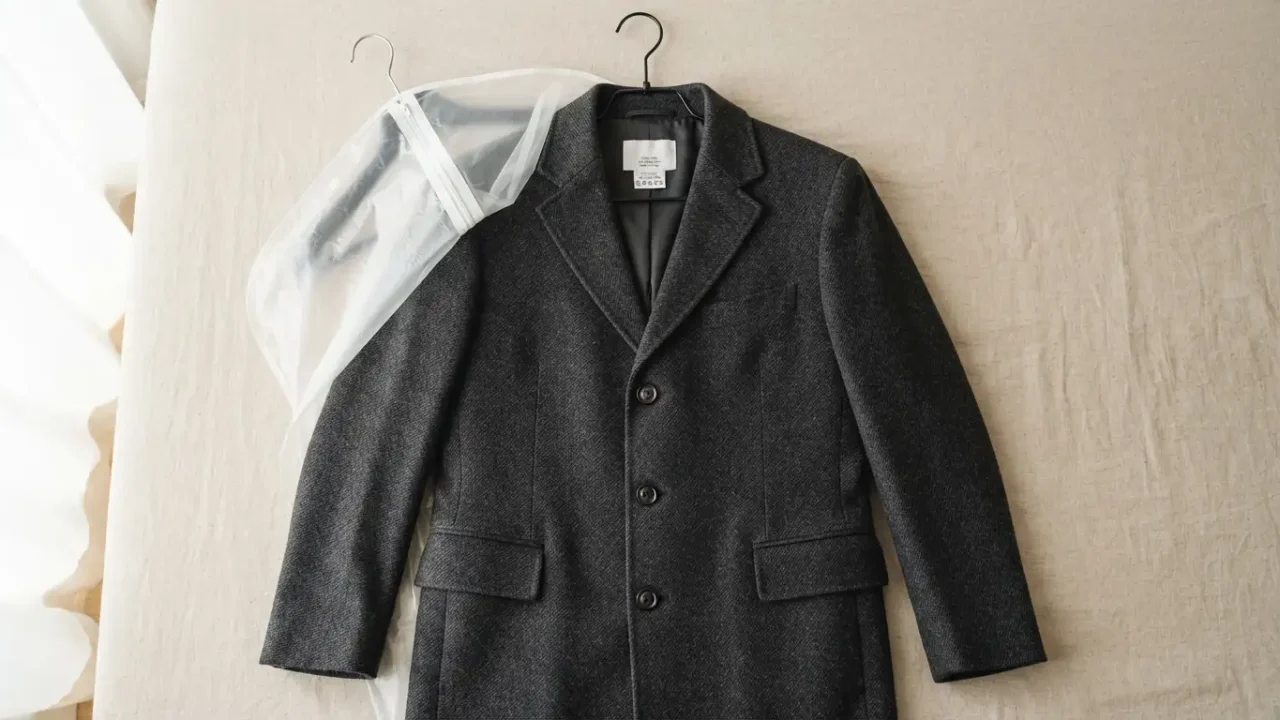
Dry cleaning a coat too often can wear out the fabric faster than necessary, while waiting too long lets dirt, oils, and odors settle in deep enough that even a professional clean struggles to fully remove them. Most people either over-clean out of habit or under-clean out of avoidance, and neither is doing the coat any favors. The right frequency depends mostly on the fabric and how often the coat is actually worn, not a fixed number that applies to everything hanging in the closet.
In this guide
- The General Rule of Thumb
- Why Over-Cleaning Is a Real Risk
- Signs Your Coat Actually Needs Cleaning
- Fabric Changes the Answer
- Between-Cleaning Care That Reduces How Often You Need It
- End-of-Season Cleaning Matters More Than Mid-Season
- How to Find a Dry Cleaner Worth Trusting
- Final Thoughts
The General Rule of Thumb
For a coat worn regularly through a full winter season, once or twice per season is usually enough for most wool and wool-blend coats. A coat that only comes out occasionally, for the odd cold day or a few special occasions, can often go a full season or longer between cleanings, as long as it’s properly aired out and spot-cleaned between wears.
This rule shifts depending on a few factors: how often the coat touches your skin or hair directly, whether you live somewhere with heavy pollution or humidity, and whether the coat has visible stains, odors, or has been exposed to something like smoke or spilled food or drink. Any of those situations call for cleaning sooner, regardless of how many times you’ve technically worn it.
Why Over-Cleaning Is a Real Risk
Dry cleaning uses chemical solvents that, while gentler than water on many delicate fabrics, still gradually break down fibers over repeated cleanings. Wool coats in particular can lose some of their natural softness and structure if dry cleaned too frequently, and the process can also fade color slightly with each round, especially on darker or more saturated coats.
This is why “clean it after every wear” isn’t actually good advice for most coats, even though it might seem like the safest habit. A coat worn for a few hours outside, without spills, visible stains, or heavy sweat exposure, doesn’t need a full clean every time. Airing it out and brushing off surface dust is often enough maintenance between actual cleanings.
Signs Your Coat Actually Needs Cleaning
Rather than going by a strict schedule, it helps to watch for a few practical signs. A noticeable odor that doesn’t air out after hanging the coat for a day is one of the clearest signals, since that usually means oils or sweat have worked into the fabric rather than just sitting on the surface. Visible stains, even small ones, are worth addressing sooner rather than later, since many stains set permanently the longer they sit, especially after being exposed to heat (like a warm closet) over time.
A coat that feels noticeably stiff, dull, or like it’s lost some of its usual texture is another sign that built-up oils or dirt are affecting the fabric, and a clean can often restore some of that original feel. If none of these signs are present and the coat still looks and smells fine, it’s usually fine to wait.
Fabric Changes the Answer
Different outerwear fabrics have different cleaning needs, so the “how often” question doesn’t have one universal answer.
Wool and wool-blend coats generally do well with cleaning once or twice a season, as described above. Wool is naturally somewhat odor- and stain-resistant, which is part of why it doesn’t need frequent cleaning.
Down and synthetic-fill puffers often specify washing rather than dry cleaning on their care labels, and many can actually be machine washed on a gentle cycle rather than needing a professional service at all. Check the label, since washing a down coat incorrectly can clump the fill and reduce its warmth.
Leather and suede coats need specialized cleaning, not standard dry cleaning, and generally require it far less often, sometimes just once a year or even less, since over-cleaning can dry out and crack the material.
Technical waterproof shells usually do better with the specific washing instructions from the manufacturer rather than dry cleaning, since dry cleaning solvents can strip the waterproof coating over time. A gentle machine wash with a technical gear detergent is often the better route, following the garment’s label. Our guide to choosing outerwear fabric for different climates explains how each material behaves.
Between-Cleaning Care That Reduces How Often You Need It
A few small habits stretch out the time between actual dry cleaning visits, which is both cheaper and gentler on the coat long-term.
Airing the coat out after each wear, rather than hanging it straight back in a closed closet, lets moisture and odor dissipate instead of settling into the fabric. A few hours on a hook near an open window or in a well-ventilated room does the job.
Brushing the coat with a soft clothes brush removes surface dust and light debris before it has a chance to work into the fibers. This is especially useful for wool, where small debris can wear down the fabric’s texture over time if left to sit.
Spot-cleaning small marks as soon as they happen, using a damp cloth and mild soap on a less visible area first to test, can handle minor spills without needing a full dry clean. For anything beyond a small, fresh mark, it’s usually safer to let a professional handle it rather than risk setting a stain further with the wrong at-home method.
End-of-Season Cleaning Matters More Than Mid-Season
Even if a coat didn’t need cleaning partway through winter, cleaning it before long-term storage at the end of the season is worth doing regardless. Any oils, odors, or small stains left on a coat over several months of storage tend to set in permanently, and they can also attract pests that are drawn to body oils on natural fibers like wool. A coat put away clean comes back out next winter in far better shape than one stored with months of light wear still on it. If you are traveling first, our tips for packing outerwear without wrinkling can save you an extra trip to the cleaner when you get home.
How to Find a Dry Cleaner Worth Trusting
Not all dry cleaners handle delicate or structured coats the same way, and a cleaner that’s great with everyday shirts isn’t automatically the best choice for a tailored wool coat. Asking about their process for coats specifically, and checking whether they specialize in outerwear or formalwear, is worth the extra few minutes before committing to a regular cleaner, especially for a more expensive or sentimental coat.
A clean coat is also one worth choosing and styling well in the first place. Check out our guides on how to choose the right coat for your body type and coat trends 2026: what's in and what's out, and for background, see the EPA's information on dry cleaning chemicals.
Final Thoughts
Most wool coats need dry cleaning once or twice a season, not after every wear, and watching for actual signs like odor, stains, or a change in texture is a better guide than a strict schedule. Lighter maintenance between cleanings, like airing out and brushing, stretches the time between visits and keeps the coat looking better overall. The fabric matters just as much as frequency, so checking the care label before assuming dry cleaning is even the right method is always worth the extra minute. Most clothing sold in the U.S. must carry washing or dry cleaning instructions under the FTC’s Care Labeling Rule, so the label is a reliable place to start.
For more on keeping a coat in good shape year-round, our coat care guide covers daily maintenance that pairs well with these cleaning habits.
For small marks between cleanings, our guide to removing common stains from winter coats covers safe at-home methods.
Cleaning is one step of putting coats away for the season. See how to transition your coat wardrobe between seasons for the full routine.