A co
Zippers and fasteners deserve a closer look too. See our guide to outerwear zippers, snaps, and closures.
at is one of the bigger clothing purchases most people make each year, and it’s also one of the easiest to get wrong. Price tags and brand names don’t tell you much. Plenty of expensive coats are flimsy, and plenty of modestly priced ones are built to last. The good news is that quality shows up in a handful of physical details, and you can check most of them in a few minutes in a fitting room, without any special knowledge.
In this guide
- Start With the Fabric Label
- Feel the Weight and the Weave
- Inspect the Stitching
- Look at the Lining
- Check the Buttons, Zippers, and Closures
- Test the Pattern Matching
- Try It On Properly
- Think About the Fill and Warmth
- Consider How Easy It Is to Care For
- A Quick In-Store Checklist
- Final Thoughts
Start With the Fabric Label
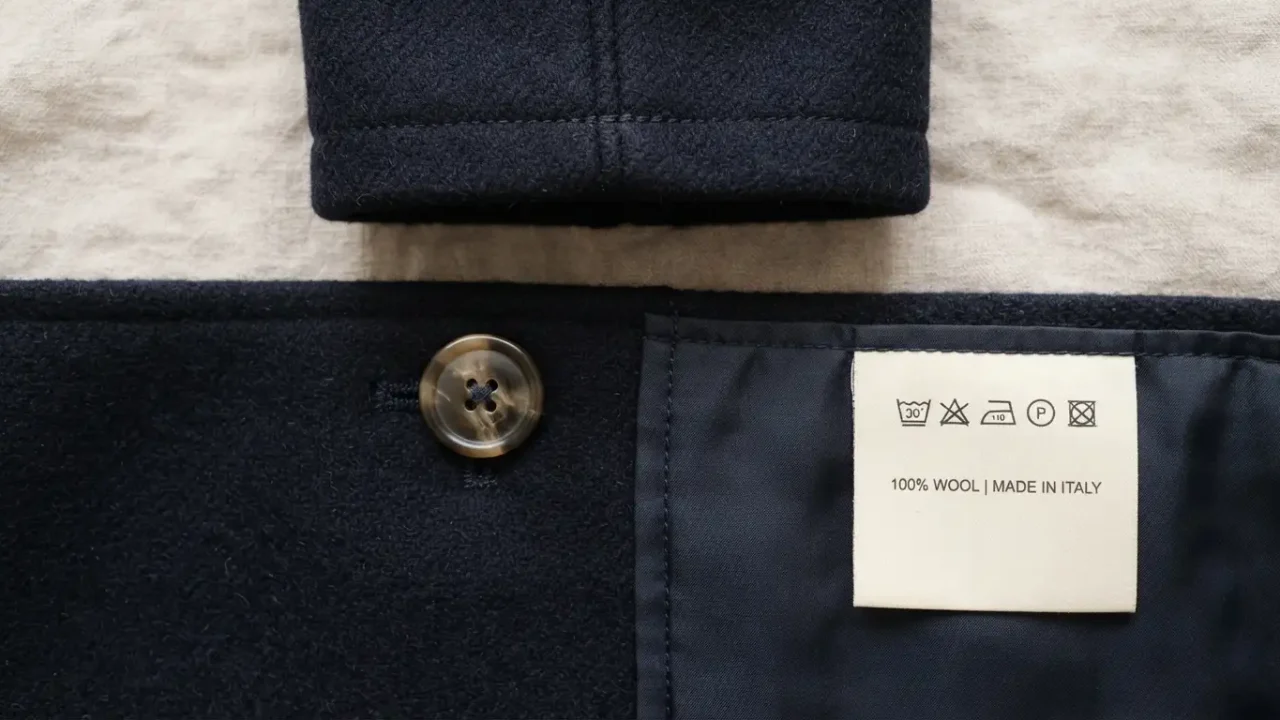
The fiber content tag is the first thing to read, and it’s usually sewn inside a side seam or near the collar. For a wool coat, a higher percentage of wool generally means better warmth and durability, while a coat that’s mostly polyester will behave very differently over time. A small amount of synthetic fiber mixed in can actually help with durability, so a blend isn’t automatically a bad sign.
If the labels feel like a foreign language, our beginner’s guide to coat fabrics explains what the common materials mean and how each one tends to wear.
Feel the Weight and the Weave
Pick the coat up before you put it on. A well-made winter coat usually has some heft to it, and the fabric should feel dense and even rather than thin or papery. Rub a small area between your fingers. A tight, consistent weave suggests the fabric will hold its shape and resist pilling, while a loose or uneven weave tends to snag and wear out quickly.
You can also hold the fabric up to a light. If you can see through it in patches or notice gaps between threads, it probably won’t hold up well to everyday friction at the elbows, cuffs, and shoulders.
Inspect the Stitching
Stitching is one of the clearest signs of how a coat was made. Look closely at the seams, especially along the shoulders, underarms, and the front edge. Small, tight, even stitches are a good sign. Long, loose, or uneven stitches suggest the coat was made quickly and may start to come apart where it gets stressed.
Gently tug on a seam. It shouldn’t pull open or show gaps. Also check for loose threads and puckering along the seam line, since puckered seams often point to rushed construction. For a little more background on how seams are built, this overview of sewing seams is a helpful reference.
Look at the Lining
The lining is easy to ignore, but it tells you a lot. Open the coat and look inside. A good lining is smooth, fully attached, and finished neatly at the hem and cuffs, with no fraying edges. It should hang flat without bunching or pulling the outer fabric out of shape.
The lining material matters for comfort too. A breathable lining feels better against your clothes and reduces static, while a cheap, slippery one can feel clammy and tends to tear sooner. If the coat has a quilted or insulated lining, check that the quilting stitches are even and that the fill isn’t shifting into lumps.
Check the Buttons, Zippers, and Closures
Hardware is where many coats show their weak points. Buttons should feel solid and be sewn on firmly, often with a few extra threads or a small reinforcing button on the inside. A button held on by a single thin thread is likely to fall off within a season. Look for buttonholes that are cleanly stitched with no fraying around the edges.
If the coat has a zipper, run it up and down a few times. It should move smoothly without catching, and the teeth should line up evenly. Metal zippers from reputable makers tend to last longer than flimsy plastic ones, though good plastic zippers exist too. Snaps and hooks should close with a firm, confident click. For a little extra background on how buttons are made and why they vary, this overview of buttons is worth a skim.
Test the Pattern Matching
If the coat is made from a plaid, stripe, or other pattern, look at how the pattern lines up across seams, pockets, and the front closure. On a well-made coat, the lines match up neatly. Mismatched patterns often signal that the manufacturer cut corners to save fabric, which can say something about how much care went into the rest of the coat.
Try It On Properly
Even a beautifully built coat is a poor buy if it doesn’t fit. Wear it with the layers you’d normally have underneath, whether that’s a sweater or a blazer. Check that the shoulder seams sit at the edge of your shoulders, that you can raise your arms without the whole coat riding up, and that the sleeves end at a sensible length.
Fit also depends on your build, and a cut that works for one person can look off on another. If you’re not sure what suits you, our guide on choosing the right coat for your body type walks through the main shapes and what tends to flatter each one.
Think About the Fill and Warmth
For padded or insulated coats, the filling matters as much as the outer fabric. Squeeze a section of the coat and let go. Good insulation springs back, while cheap or compacted fill stays flat. If you’re comparing insulation types, our breakdown of wool vs down vs synthetic coat fill explains how each one performs and which situations suit it best.
Consider How Easy It Is to Care For
A high-quality coat is only a good investment if you can keep it looking good. Check the care label to see whether it needs dry cleaning or can be spot cleaned, and think about whether that fits your routine. Some of the most beautiful coats are also the most demanding to maintain. Once you’ve bought one, our coat care guide covers the everyday habits that help it last.
A Quick In-Store Checklist
If you want a short version to run through in the fitting room, these checks cover most of what matters:
- Fiber content suits your climate and the percentage of the main fiber is high.
- Fabric feels dense and even, with no see-through patches.
- Stitching is small, tight, and even, with no loose threads.
- Lining is smooth, fully attached, and neatly finished.
- Buttons are firmly sewn and zippers run smoothly.
- Patterns match across seams, if the coat has one.
- The coat fits comfortably over the layers you’ll actually wear.
- The care instructions fit how much effort you’re willing to put in.
Final Thoughts
You don’t need to be an expert to spot a well-made coat. A few minutes checking the fabric, stitching, lining, and hardware will tell you far more than the price tag or the brand name. A coat that passes these checks usually looks better for longer, holds its shape through several winters, and ends up costing less per wear, which is the real measure of a good purchase.