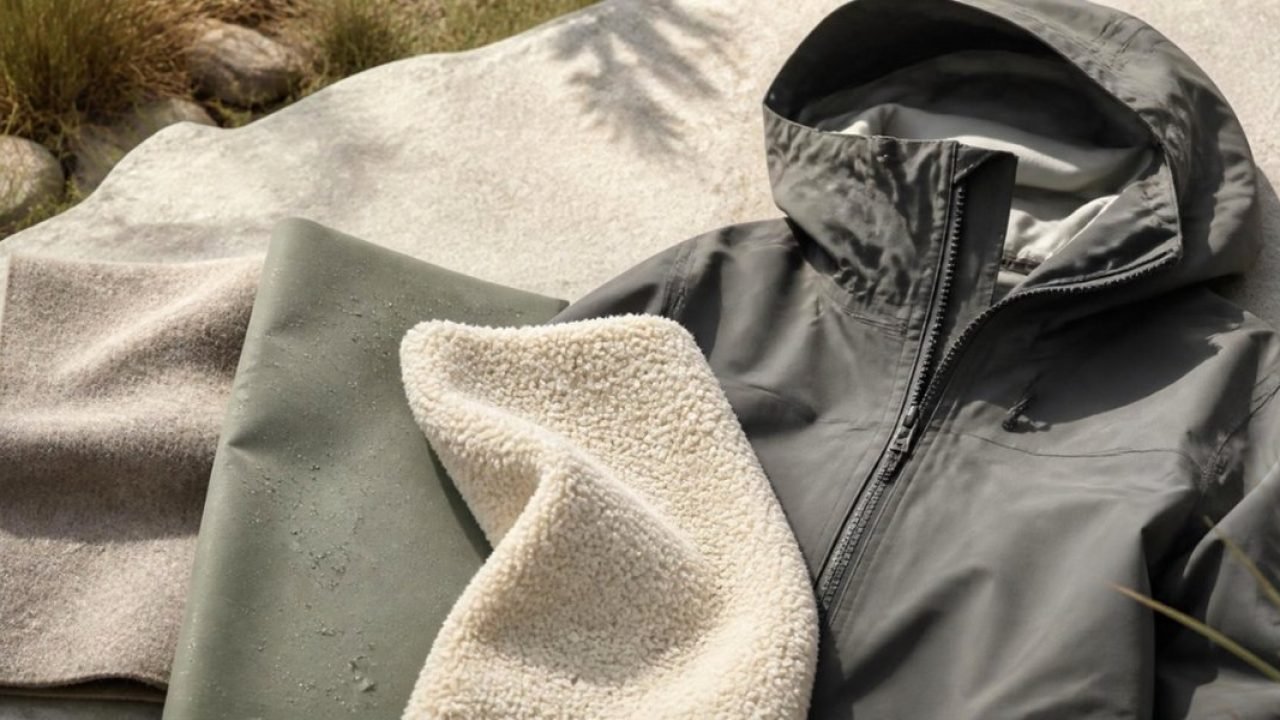
Buying a jacket often comes down to how it looks on the rack, and only later do you find out whether it actually works where you live. Someone in a damp coastal city needs something different from someone in a dry, windy plain, and both need something different from a person dealing with deep winter cold. Outerwear fabric is the part that decides all of this, more than the cut or the brand. This guide walks through how to match fabric to climate, so the next jacket you buy actually earns its place in your closet.
In this guide
- Start With What the Fabric Actually Has to Do
- Cold and Dry Climates
- Wet and Mild Climates
- Windy Climates
- Humid or Transitional Climates
- Reading Labels the Right Way
- A Simple Way to Decide
- Final Thoughts
Start With What the Fabric Actually Has to Do
Every outerwear fabric is built around a trade-off between three things: warmth, breathability, and weather resistance. No single fabric maxes out all three, which is why a ski jacket and a rain shell look and feel so different even though they’re both outerwear. Before shopping, it helps to rank which of the three matters most for your climate. Someone in a wet, mild region should prioritize weather resistance over warmth. Someone in a dry, freezing region can prioritize warmth over waterproofing, since snow behaves differently than rain.
Once you know your priority, the fabric choice gets a lot simpler, because most jackets are designed around one of these three goals rather than all of them equally.
Cold and Dry Climates
In climates where winter means dry, biting cold rather than constant rain, insulation matters more than waterproofing. Down fill is the classic choice here. It has one of the best warmth-to-weight ratios of any material, trapping air in small pockets that hold in body heat. The catch is that down loses most of its insulating power when it gets wet, which is fine in a dry cold climate but a real problem anywhere with frequent rain or wet snow.
Wool is the other strong option for dry cold. A tightly woven wool coat holds heat well, resists wind better than most knits, and has a natural water resistance that sheds light snow. It’s heavier than down, but for everyday wear in a cold city, that weight often comes with better structure and a longer lifespan.
If you want something animal-free, synthetic insulation (often labeled as polyester fill) mimics down’s trapped-air warmth while still performing reasonably when damp. It’s usually less warm ounce for ounce, so jackets using it tend to be a bit bulkier for the same warmth level.
Wet and Mild Climates
If your winters are more rain than snow, and temperatures rarely drop far below freezing, waterproofing should lead your decision, not insulation. Look for jackets labeled waterproof, not just water-resistant. The two terms get used loosely, but water-resistant fabric only holds off light drizzle, while waterproof fabric is treated or laminated to block sustained rain.
A shell made from a laminated fabric with a waterproof, breathable membrane is the standard choice for this kind of climate. It blocks rain from getting in while still letting some body heat and moisture escape, so you don’t end up soaked in sweat under a totally sealed jacket. Because mild, wet climates don’t usually need heavy insulation, many people layer a thin fleece or sweater underneath rather than buying a jacket that’s insulated on its own.
Pay attention to the seams, too. A genuinely waterproof jacket has taped or sealed seams, since stitching alone creates small holes that let water through over time. This detail is often listed in the product description and is worth checking before you buy.
Windy Climates
Wind cuts through fabric in a way that’s easy to underestimate until you’ve stood outside in it. Wind doesn’t just feel colder, it actively pulls heat away from your body faster than still air does, so a jacket that feels warm indoors can feel thin the moment you step outside on a gusty day.
A tightly woven outer layer, sometimes labeled windproof or wind-resistant, blocks air from passing through the fabric itself. This matters more than raw thickness. A thin windproof shell can outperform a thicker but loosely woven sweater once the wind picks up. Many outdoor brands build a dedicated wind layer that isn’t insulated or waterproof at all. It’s simply a tightly woven barrier meant to be worn over a warmer layer.
If you live somewhere with regular wind but not much rain or extreme cold, a windproof shell over a mid-weight sweater often works better than a single heavily insulated coat, since it lets you adjust warmth by changing what’s underneath.
Humid or Transitional Climates
Climates that swing between mild and cool, or that stay humid even in cooler months, are actually some of the harder ones to shop for. A heavy insulated coat becomes uncomfortable the moment the temperature climbs, and a thin jacket leaves you cold on the sharper mornings.
Breathable, mid-weight fabrics work best here. Look for jackets described as breathable or moisture-wicking, since these are built to let sweat and humidity escape rather than trap it against your skin. A softshell jacket, which blends some water resistance with stretch and breathability, tends to handle these in-between climates better than a heavily insulated puffer or a fully sealed rain shell.
For truly humid climates, natural fibers like cotton-blends or technical fabrics designed for moisture management usually feel more comfortable over a full day than synthetic insulation, which can trap heat and feel clammy once humidity rises.
Reading Labels the Right Way
Jacket labels use a handful of terms that are easy to confuse, so it helps to know what they actually mean before you’re standing in a store or scrolling through listings.
Waterproof means the fabric is treated or laminated to block water under sustained exposure. Water-resistant means it can handle light moisture but isn’t built for real rain. Breathable refers to how well the fabric lets water vapor (like sweat) escape from the inside, which matters as much as keeping rain out from the outside. Windproof means the weave is tight enough to stop air from passing through, which is a separate quality from both warmth and waterproofing.
A jacket can have any combination of these, so the most reliable approach is to match the specific label to your climate’s biggest challenge, rather than assuming a jacket that’s warm is also waterproof, or that one that’s waterproof is also warm. Beyond those marketing terms, most clothing sold in the U.S. must carry care instructions under the FTC’s Care Labeling Rule, so check that tag too.
A Simple Way to Decide
If you’re not sure where to start, ask yourself which of these describes most of your winter: mostly dry and cold, mostly wet, mostly windy, or mixed and mild. That answer points you toward insulation type, waterproof rating, windproof construction, or breathable mid-weight fabric, in that order of priority.
It’s also worth thinking about layering rather than expecting one jacket to do everything. A well-chosen mid layer paired with the right outer shell often performs better across a range of conditions than one heavily built coat meant to handle all of them at once. Our guide to layering coats in winter without looking bulky shows how to build that kind of setup.
Once you’ve picked the right fabric for your climate, a couple of other guides can help you get more out of it. Our guide on how to pack outerwear for travel without wrinkling is a good next read, and for background, see how waterproof fabric technology works.
Final Thoughts
The right outerwear fabric isn’t about finding the warmest or the most expensive option. It’s about matching the fabric’s strengths to the specific weather you actually deal with most often. A dry, cold climate calls for down or wool. A wet climate calls for a genuinely waterproof, sealed-seam shell. A windy climate calls for a tightly woven windproof layer. And anything in between benefits most from breathable, mid-weight fabric that won’t leave you overheated on the milder days.
Once you know what your climate actually demands, choosing outerwear stops being a guessing game and starts being a straightforward match between fabric and function. When you are ready to go further, see how to choose the right coat for your body type, and keep it looking new with our coat care guide.
If a label says “waterproof,” it’s worth knowing what that actually means. Our guide on waterproof vs water-resistant jacket ratings breaks down hydrostatic head numbers and seam sealing in more detail.