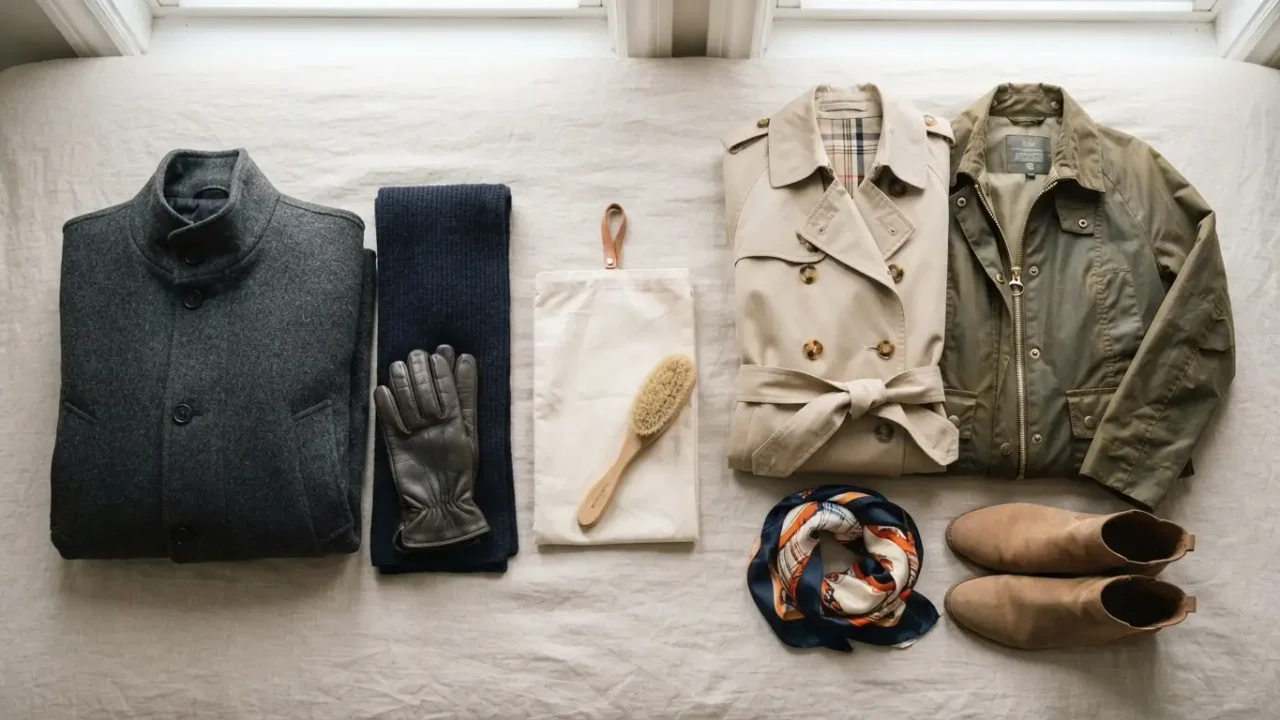
The weeks between seasons are the trickiest part of dressing for the weather. Mornings are cold, afternoons are warm, and a heavy winter coat suddenly feels like too much while a light jacket isn’t quite enough. Managing that shift well comes down to two things: having the right in-between pieces, and handling the handover between your heavy coats and your lighter ones with a little care. Do both, and you’ll stay comfortable through the swing and your coats will be in better shape when you need them again.
In this guide
- Recognize the In-Between Weather
- The Best Transitional Coat Styles
- Let Layering Do the Work
- Don't Pack Away the Winter Coat Too Soon
- Clean Coats Before You Store Them
- Repair Small Problems Now
- Store Coats the Right Way
- Bring Out Your Lighter Coats
- Refresh With Small Styling Changes
- A Simple Seasonal Checklist
- Final Thoughts
Recognize the In-Between Weather
Transitional weather isn’t a single temperature. It’s a pattern of swings, with cool starts, mild middays, and sometimes sudden rain or wind. Rather than trying to dress for the coldest moment of the day, aim for the middle and plan to adjust. A medium-weight jacket with a layer underneath that you can add or remove usually works better than committing to a heavy coat or a thin shell.
Checking the forecast for the high and the low, not just the current temperature, helps you decide what to wear and what to carry.
The Best Transitional Coat Styles
A few styles do especially well in the in-between months. A trench coat is the classic choice, since it handles light rain and wind and layers easily over or under other pieces. A lightweight wool coat offers more warmth without the bulk of a winter coat. Denim jackets, bomber jackets, and field jackets are casual options that work over a sweater. A lightweight quilted jacket or an insulated vest adds warmth without the weight of a full puffer.
If you’re not sure which of your current coats suit this role, try them on over a medium sweater and see whether you can move comfortably. For a closer look at how fabrics behave in different weather, our guide to choosing outerwear fabric for different climates can help.
Let Layering Do the Work
The easiest way to bridge the seasons is to rely on layers rather than on a single coat. A thin base layer, a mid-weight sweater or fleece, and a light outer layer can be adjusted through the day. Taking off the sweater when it warms up, or adding it back when it cools down, gives you flexibility that a single coat can’t. Our guide to building the perfect outerwear wardrobe with a layering system explains how to organize base, mid, and outer layers.
Don’t Pack Away the Winter Coat Too Soon
It’s tempting to put the heavy coat away at the first warm day, but cold snaps often return. A good habit is to keep one winter-weight coat accessible until the weather has been consistently mild for a couple of weeks. Moving the bulky pieces to the back of the closet, while leaving them reachable, saves space without leaving you cold.
Clean Coats Before You Store Them
Before a coat goes into storage for the season, it should be clean. Body oils, sweat, and small stains that look harmless now can become permanent over months of storage, and they can attract pests. Check the care label, and have dry-clean-only coats cleaned professionally. For help deciding when a professional clean is worthwhile, see our guide on how often to dry clean a winter coat.
For spot marks you can treat yourself, such as salt lines on the hem, our guide to removing common stains from winter coats covers safe methods.
Repair Small Problems Now
The end of the season is the ideal time to fix loose buttons, small tears, and worn linings. It’s much easier to do while you’re thinking about it than next fall when you’re reaching for the coat in a hurry. If a coat needs more than a simple repair, this is also a good moment to decide whether it’s worth keeping.
Store Coats the Right Way
How you store a coat affects how it looks next year. Heavy wool coats keep their shape best on a sturdy, wide hanger, in a breathable garment bag, rather than in a thin plastic cover that can trap moisture. Bulky puffers can be stored loosely in a large breathable bag, without being compressed for months, since long compression can reduce the loft of the fill.
Choose a cool, dry, dark space, and avoid damp basements or hot attics. Cedar blocks or sachets help deter moths, and they’re gentler than traditional mothballs, which have a strong smell that can cling to fabric.
Bring Out Your Lighter Coats
When you unpack the lighter coats, give them a quick check. Air them out, brush off any dust, and steam out creases. Try them on to confirm they still fit, and check the zippers, buttons, and linings. If a coat feels dull or you’re not sure about its condition, it’s worth taking a moment to ask whether it’s still doing its job, and our guide on the signs it’s time to replace your outerwear can help.
Refresh With Small Styling Changes
You don’t need a whole new wardrobe to feel ready for a new season. Swapping a heavy scarf for a lighter one, changing boots for ankle boots or sneakers, and trying a different color palette can make an existing coat feel new. Our guide on styling one coat five different ways shows how much range a single coat can have.
A Simple Seasonal Checklist
- Check the forecast for highs and lows, not just the morning temperature.
- Keep one medium coat and one lighter layer within easy reach.
- Clean and repair heavy coats before storing them.
- Store coats on sturdy hangers or loosely, in breathable bags, in a cool, dry place.
- Air out, check, and steam the lighter coats before you bring them out.
Final Thoughts
Transitioning your coat wardrobe doesn’t need to be a big project. Keep a few versatile in-between pieces on hand, lean on layers, and give your heavy coats a proper clean and repair before they go into storage. A little effort at the change of each season means fewer cold mornings, fewer ruined coats, and an easier start when the weather turns again.