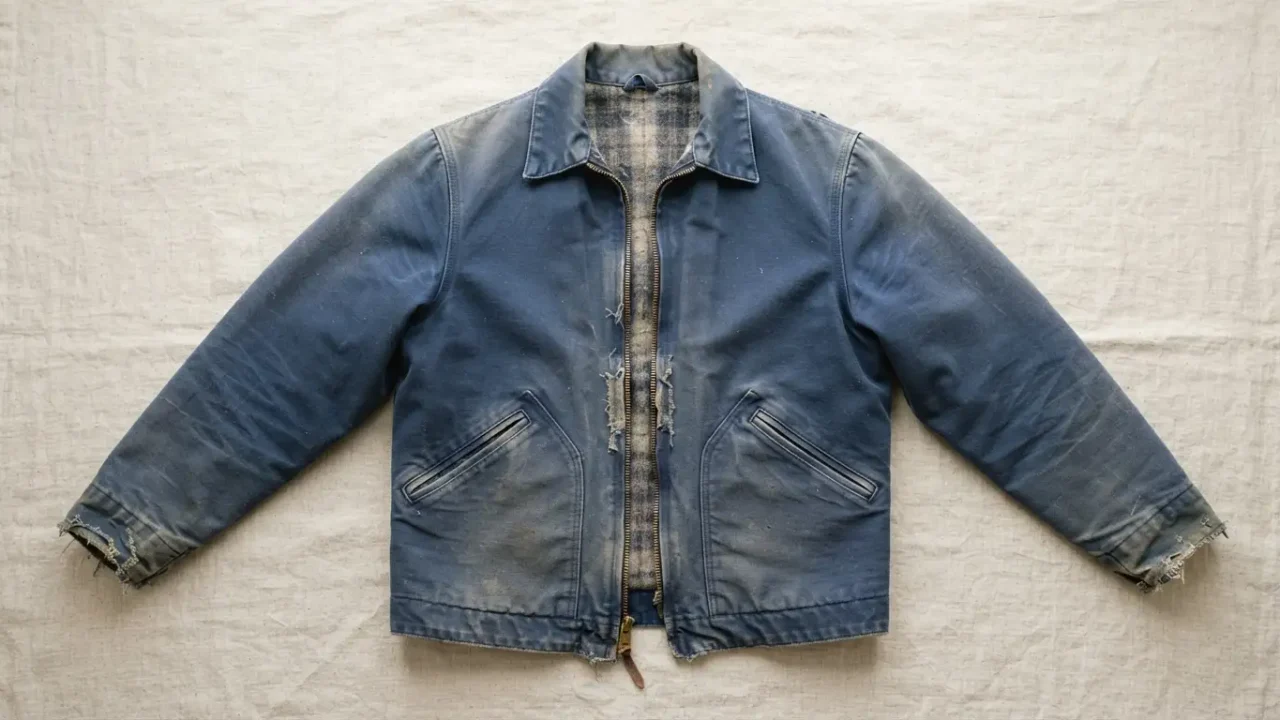
Most of us hang on to a favorite jacket longer than we should. It still fits, it still looks fine from across the room, and replacing it feels like an expense we can put off another year. But outerwear does a real job, keeping you warm and dry, and when it stops doing that job well, the savings from holding on to it can disappear quickly in the form of a miserable commute or a ruined outing. Here’s how to tell whether your jacket has another season left or has earned its retirement.
In this guide
- It No Longer Keeps You Warm
- The Waterproofing Has Given Out
- The Zipper or Closures Keep Failing
- The Fabric Is Visibly Worn or Damaged
- It Has Stubborn Odors or Stains That Won't Come Out
- The Fit Has Changed, or So Has Your Life
- Repair or Replace: A Simple Way to Decide
- Getting More Life Out of the Next One
- Final Thoughts
It No Longer Keeps You Warm
The clearest sign is also the simplest: you’re cold in a jacket that used to keep you comfortable at the same temperature. Insulation breaks down over time. Down fill can flatten and clump after years of compression and washing, and synthetic fill loses its loft as the fibers pack down. Wool coats can thin out at the elbows and shoulders where they get the most friction.
A quick check is to lay the jacket flat and look at how evenly the fill is distributed. If you can see or feel flat patches, or if the jacket feels noticeably thinner than it once did, the warmth you remember is probably gone for good, no matter how good the outside still looks.
The Waterproofing Has Given Out
If rain used to bead up and roll off your jacket and now soaks straight into the fabric, the surface coating has worn away. That coating, usually a Durable Water Repellent finish, naturally fades with washing, abrasion, and dirt. The good news is that this part is sometimes fixable, since a fresh treatment can bring the surface performance back, and our guide on waterproof vs water-resistant jacket ratings explains how to tell which part of the jacket is actually failing.
The bad news is that if water is getting through the fabric itself, or leaking at the seams, the membrane or the seam tape has broken down. That’s usually not repairable in any lasting way, and it’s a strong signal that the jacket’s useful life as a rain layer is over.
The Zipper or Closures Keep Failing
A zipper that sticks, splits open, or won’t stay closed is more than an annoyance, because it lets cold air and rain straight in. A zipper can sometimes be replaced by a tailor or repair shop, and for a coat you love, that’s often worth doing. But if the zipper problem comes with other signs of wear, the repair may be a poor investment.
The same goes for snaps, buttons, and Velcro closures that no longer hold. One missing button is an easy fix. A whole row of loose or failing fasteners, especially on an older coat, suggests the garment is wearing out all over at once.
The Fabric Is Visibly Worn or Damaged
Look closely at the places that take the most stress: cuffs, collar, elbows, shoulders, and the area where a bag strap rests. Fraying, thinning fabric, small holes, or a shiny, rubbed-smooth look on the surface all point to fabric that’s reaching the end of its life.
Small tears can often be patched, and that’s a perfectly reasonable fix for a jacket that’s otherwise in good shape. The question to ask is whether the damage is a one-off or a sign of widespread wear. If you patch one spot and another appears a month later, the fabric as a whole is giving up.
It Has Stubborn Odors or Stains That Won’t Come Out
A coat that smells musty even after airing out, or one with stains that survived professional cleaning, may have oils, sweat, or moisture worked deep into the fibers. Sometimes a proper cleaning helps, and our guide on how often to dry clean a winter coat covers when that’s worth trying and when it’s not.
If you’ve already cleaned the jacket properly and the problem is still there, the fabric itself has absorbed more than it can release. At that point, a replacement is usually the more practical choice than continuing to fight it.
The Fit Has Changed, or So Has Your Life
Sometimes a jacket doesn’t wear out at all, it just stops being the right jacket. If your body has changed, your climate has changed, or your daily routine now involves very different demands, a coat that once suited you may no longer be a good fit for how you actually live.
A lightweight jacket that worked fine in a mild city may not be enough after a move somewhere colder, for example. If that’s your situation, our guide on choosing outerwear fabric for different climates is a helpful starting point before you buy a replacement.
Repair or Replace: A Simple Way to Decide
It’s worth asking one practical question before replacing anything: is there one fixable problem, or several? A single failed zipper, a missing button, or a small tear on an otherwise solid jacket is usually worth repairing, especially if it’s a well-made piece you like wearing. Two or three problems showing up at once, such as thinning insulation, failing waterproofing, and worn fabric, usually means the jacket as a whole has reached the end of its useful life.
A rough rule many people use is to compare the repair cost against the price of a comparable replacement. If repairs would cost more than about half of what a similar new jacket would, replacement tends to make more sense.
Getting More Life Out of the Next One
Once you’ve replaced a jacket, a few habits help the new one last longer. Following the care label, airing it out between wears, and cleaning it only when it actually needs it all add up over the years. Our coat care guide covers these day-to-day habits in more detail.
Rotating between two jackets, rather than wearing the same one every single day, also spreads out the wear and lets each one recover between uses, which can noticeably extend the life of both.
Final Thoughts
Outerwear rarely fails all at once. It fades gradually, which is why it’s easy to miss the point where it stops doing its job. Cold spots, soaked-through fabric, broken closures, visible wear, and stubborn odors are all signs worth taking seriously, and when several show up together, replacing the jacket is usually smarter than continuing to repair it. Matching your next jacket to your actual climate and daily needs gives you the best chance of getting many more good winters out of it.
For a closer look at how water-repellent finishes work and why they wear off, this overview of durable water repellent coatings explains the science behind it.
If the only problem is a worn water-repellent finish, waterproofing your jacket at home may buy it another season or two.
Many early replacements come down to avoidable habits. See common outerwear mistakes and how to avoid them.