A winter coat takes a beating. It brushes against car doors, picks up road salt and slush, catches coffee drips on the way to work, and rubs against makeup and sweat at the collar. Most of these marks look worse than they really are, and many can be dealt with at home if you act quickly and use the right approach. The wrong approach, on the other hand, can set a stain for good or damage the fabric, so it pays to know the basics before you reach for the nearest cleaning product.
In this guide
- Start With the Care Label
- The Golden Rules of Stain Removal
- What to Have on Hand
- Road Salt Stains
- Mud and Dirt
- Grease and Oil
- Coffee, Tea, and Other Drinks
- Makeup and Sweat at the Collar
- Ink and Stubborn Marks
- What to Avoid
- Special Care for Different Coat Types
- Prevent Stains in the First Place
- Final Thoughts
Start With the Care Label
Before you treat any stain, check the care label inside the coat. It tells you whether the fabric can handle water, whether the coat is dry-clean only, and what to avoid. A coat marked dry clean only generally shouldn’t be soaked or scrubbed at home, and leather, suede, and some delicate wools need specialist care. If you’re not sure what your coat is made from, our beginner’s guide to coat fabrics helps you decode the label.
The Golden Rules of Stain Removal
A few habits apply to almost every stain. Act as soon as you can, because fresh stains come out far more easily than old ones. Blot instead of rubbing, since rubbing pushes the stain deeper and can damage the fibers. Work from the outside of the stain toward the center so it doesn’t spread. Use cool or lukewarm water rather than hot, because heat can set many stains permanently.
Always test any cleaning solution on a hidden area first, such as an inside seam or the underside of a hem, and wait for it to dry to see whether it changes the color or texture. For a broader reference on how stain removal works, this overview of stain removal is a handy read.
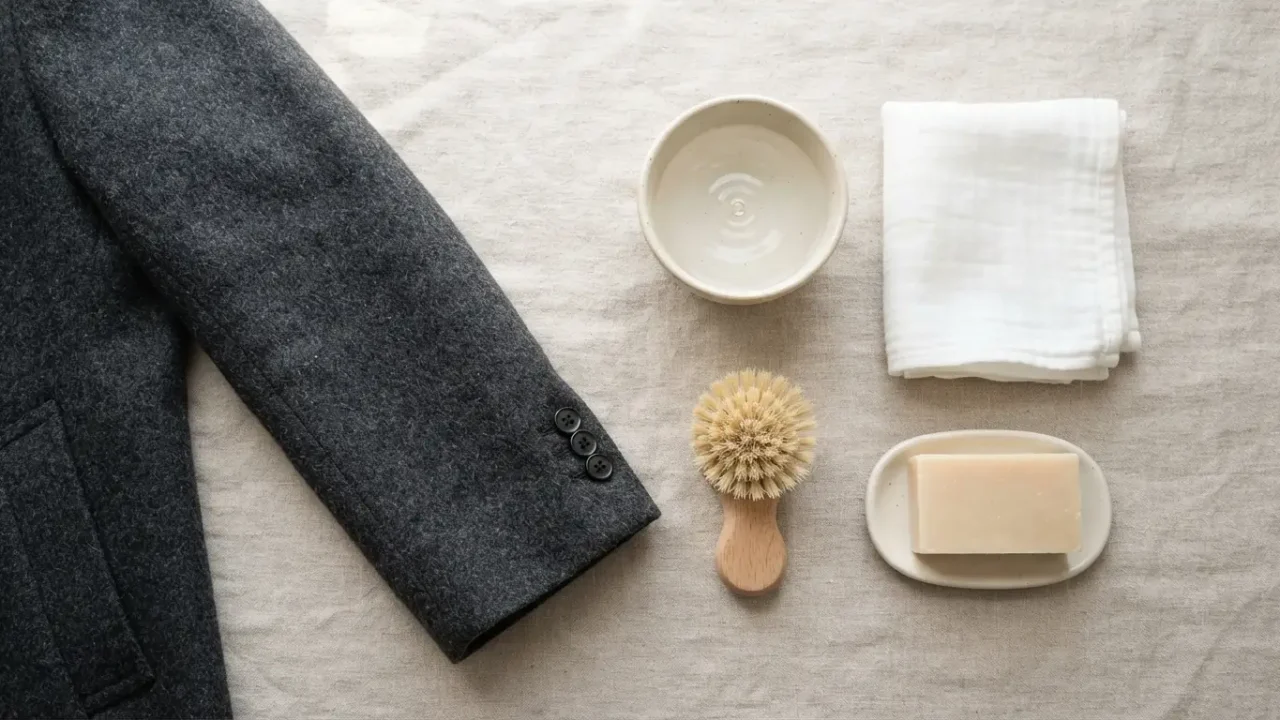
What to Have on Hand
- A soft clothes brush and a clean white cloth
- A mild, fragrance-free detergent or gentle soap
- White vinegar
- Cornstarch or baking soda for absorbing grease
- Cool water in a small bowl
Using white cloths matters, since a colored cloth can transfer dye onto a damp coat.
Road Salt Stains
Those pale, chalky lines around the hem and cuffs are the classic mark of winter. They come from road salt, and they’re worth dealing with promptly because salt can stiffen and weaken fabric over time. Mix equal parts white vinegar and cool water, dampen a white cloth, and gently blot the marks. Follow with a cloth dampened with plain water to rinse, then blot dry and let the coat air dry away from heat. Skip the vinegar on leather and suede, which need specialist products.
Mud and Dirt
The trick with mud is patience. Let it dry completely, then brush away as much as you can with a soft brush. Trying to wipe wet mud usually grinds it into the fabric. Once the loose dirt is gone, any remaining mark can be blotted with a cloth dampened with a little mild detergent mixed in cool water, then rinsed by blotting with a clean damp cloth.
Grease and Oil
Food splatters and oily marks need an absorbent first. Sprinkle cornstarch or baking soda over the spot, let it sit for several hours to draw out the oil, and brush it off gently. If a mark remains, dab it with a small amount of mild detergent diluted in water, then rinse by blotting. Stubborn grease on a delicate fabric is a good moment to call a professional rather than experiment.
Coffee, Tea, and Other Drinks
Blot up as much of the spill as you can right away, without rubbing. Then dab the area with a cloth dampened in cool water, working from the outside inward. If a mark remains, a drop of mild detergent diluted in water can help. Avoid hot water, which can set tannin stains like tea and coffee. Sugary or milky drinks can leave sticky residue, so rinse the area by blotting a few times with plain water.
Makeup and Sweat at the Collar
The collar and cuffs collect makeup, skin oils, and sweat. Treat light marks with a little mild soap diluted in water, blotting gently with a white cloth. Brushing the collar regularly and airing the coat after wearing it reduces build-up in the first place. If the collar is heavily soiled, a professional clean is often the safest option, and our guide on how often to dry clean a winter coat can help you decide when it’s time.
Ink and Stubborn Marks
Ink, dye transfer, and old set-in stains are the hardest to remove at home, and aggressive treatments can spread them or damage the coat. For these, it’s usually best to take the coat to a professional cleaner as soon as possible, and to tell them what caused the stain and what you’ve already tried.
What to Avoid
A few well-meaning habits cause the most damage. Don’t rub or scrub, don’t use hot water, and don’t use bleach or harsh household cleaners on a coat. Avoid putting a stained coat in the dryer, since heat can lock a stain in. Also resist the urge to soak a coat that is marked dry clean only. When in doubt, a gentle blot and a visit to the cleaner is safer than an experiment.
Special Care for Different Coat Types
Wool coats generally respond well to gentle blotting and air drying, but they dislike soaking and hard rubbing. Down and synthetic-fill coats often have washing instructions of their own, so follow the label rather than spot treating aggressively. Technical shells can usually take a gentle wipe, though harsh products can damage their water-repellent finish. Leather and suede need products made specifically for them.
Prevent Stains in the First Place
A little prevention goes a long way. Brush your coat after wearing it, wipe off salt and slush when you get home, and hang it somewhere with good airflow. Fixing small marks promptly stops them becoming permanent. Our coat care guide covers more of these everyday habits, and if a coat is stained beyond repair or showing wear everywhere, our guide on the signs it’s time to replace your outerwear can help you decide whether to let it go.
Final Thoughts
Most winter coat stains are manageable if you stay calm, act quickly, and use gentle methods: check the label, blot rather than rub, use cool water, and test first. Save the harder cases, like ink and set-in marks, for a professional. With a little attention after each wear, your coat can look good for many winters.