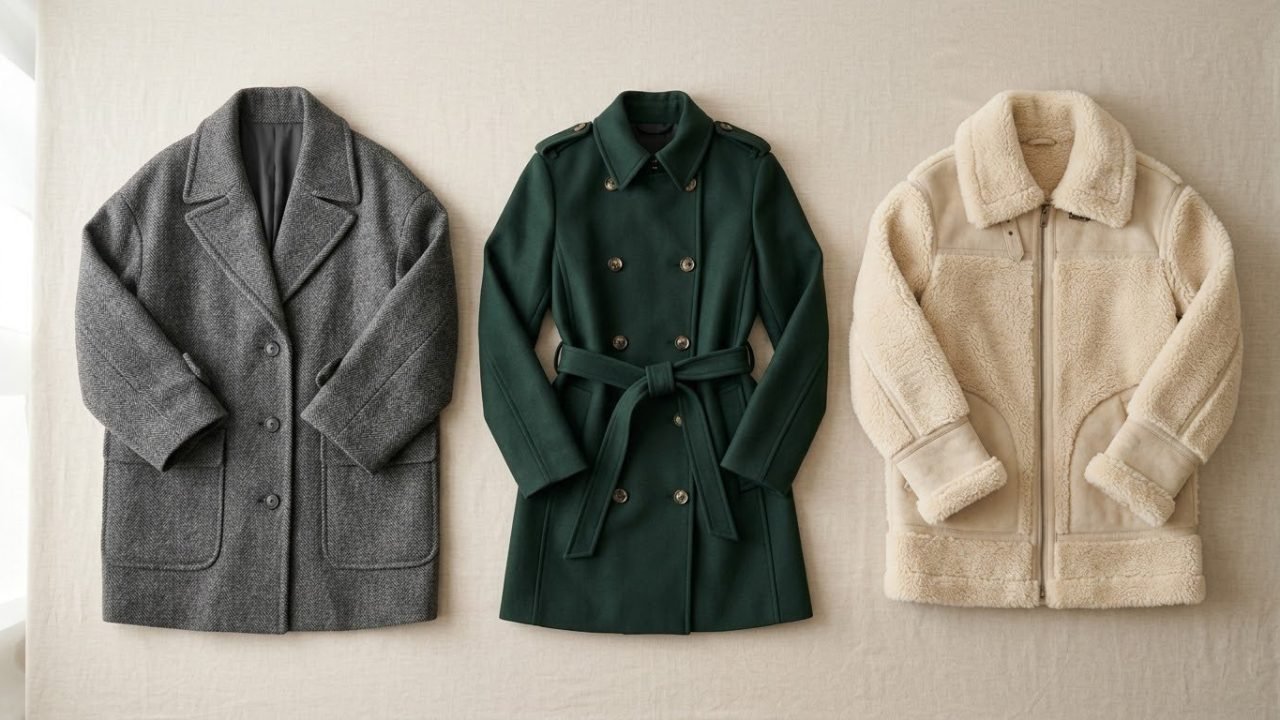
Every year the coat racks shift a little, and 2026 is no exception. Some of what’s trending now has been building for a few seasons, while a handful of styles that felt essential a couple of years ago are starting to look dated. If you’re planning one or two coat purchases this winter, it helps to know which direction things are moving before you spend on something that’ll feel out of step by next year.
In this guide
- What’s In for 2026
- What’s On Its Way Out
- How to Tell a Trend From a Timeless Piece
- Shopping With Trends in Mind, Without Overspending on Them
- Final Thoughts
Here’s a practical look at what’s in, what’s fading out, and how to tell the difference between a passing trend and a style actually worth investing in.
What’s In for 2026
Oversized, Relaxed Silhouettes
The oversized coat trend has stuck around longer than most expected, and 2026 pushes it even further. Think roomy shoulders, longer sleeves meant to be pushed up or cuffed, and a length that falls past the hip. The key difference this year is that oversized no longer means shapeless. The most popular versions still have some structure in the shoulder, so the coat reads as intentionally relaxed rather than simply too big.
This style works best layered over a slimmer base, since pairing oversized with oversized tends to swallow the frame. A fitted sweater or a slim turtleneck underneath keeps the proportions balanced. Our guide to layering coats in winter without looking bulky shows how to get that balance right.
Textured and Shearling Finishes
Texture is having a real moment. Shearling, faux fur trims, and nubby bouclé fabrics are showing up across coat collections, often on otherwise simple, classic shapes. Rather than a fully fur coat, the trend leans toward texture as an accent, a shearling collar, cuffs, or lining peeking out at the hem.
This approach makes the trend easier to wear long-term, since a textured accent on a classic coat shape ages better than a coat that leans fully into one bold material.
Rich, Warm Neutrals
Coat colors are shifting away from stark black and navy toward warmer neutrals: camel, chocolate brown, rust, and deep cream. These tones photograph well, pair easily with most wardrobes, and feel a little more distinct than the safest black coat option. Camel in particular has moved from a classic staple to an actual trend talking point this year, showing up in both tailored and oversized cuts.
If you’re choosing a single coat color to invest in, a warm neutral is both on-trend right now and safe enough to still look right in a few years.
Longline Tailored Coats
On the more polished end, longline coats that hit at or below the knee, with a tailored waist and clean lines, are trending for work and eveningwear. These lean more formal than the oversized trend and tend to show up more in blazer-style or wool coat silhouettes rather than casual puffers.
This style pairs well with the warm neutral color trend above, and a camel or chocolate longline coat covers both trends in a single piece.
Statement Buttons and Closures
A smaller detail trend worth noting: oversized, contrasting, or decorative buttons are showing up as a focal point rather than a background detail. A plain wool coat with large, noticeable buttons reads as more current than the same coat with small, matching ones. It’s a low-commitment way to make a classic coat feel a bit more current without changing the whole silhouette.
What’s On Its Way Out
Extremely Cropped Jackets
The very short, cropped jacket trend that dominated a couple of years ago is fading, especially for coats meant for actual cold-weather wear. Cropped styles are harder to layer over sweaters, leave the lower body exposed to the cold, and are being replaced by the longer, more functional silhouettes mentioned above. Cropped jackets haven’t disappeared completely, but they’re shifting toward transitional spring wear rather than a winter coat staple.
Heavily Logo’d or Branded Coats
Coats covered in large, repeated branding or logo prints are losing ground to simpler, more minimal designs. The shift mirrors a broader move toward quiet, understated pieces rather than obvious branding, especially in coats, which tend to be a higher-investment item people want to wear for several years rather than one trend cycle.
Stark All-Black Everything
All-black coats aren’t disappearing, but relying on black as the only neutral in your coat rotation is starting to feel dated next to the warmer tones trending now. If your current coat is black and still in good shape, there’s no need to replace it, but if you’re shopping for something new, a warm neutral will feel more current.
Overly Shiny, Technical Fabrics
Puffer coats made from high-shine, technical-looking fabric are cooling off in favor of matte finishes and more natural-looking materials, even within the puffer category itself. A matte quilted coat now reads as more intentional than a glossy one, which is starting to look more like sportswear than everyday outerwear.
Overly Fitted, Structured Blaz¿¿Coats
Very tightly fitted, boxy blazer-coats with sharp shoulder pads are softening into the more relaxed silhouettes covered above. Structure hasn’t disappeared, but it’s shifting toward soft structure rather than stiff, sharply tailored shapes.
How to Tell a Trend From a Timeless Piece
Not every trend is worth chasing, and it helps to separate the ones with real staying power from the ones likely to look dated within a year or two. A good rule of thumb: if a trend is really just a variation on a classic shape (like a longline coat in a trending color, or texture added to a familiar silhouette), it’s a safer investment. If a trend changes the fundamental shape or proportion of the coat in a dramatic way (like extreme cropping or exaggerated oversizing), it’s more likely to feel specific to this moment. It also matters beyond your budget: discarded clothing is the main source of textiles in U.S. municipal solid waste, according to the EPA, so a coat you keep wearing for years keeps more out of the trash.
If you’re buying one coat this season and want it to last, lean toward the trends that layer onto a classic shape, like a warm neutral longline coat with a textured collar, rather than chasing the most dramatic silhouette on the rack.
Shopping With Trends in Mind, Without Overspending on Them
A practical approach is to put your money toward the shape and color that are trending and likely to stay relevant, like a longline coat in camel or chocolate, and treat the smaller, faster-moving details, like statement buttons or a textured trim, as a lower-cost way to feel current. That way, one well-chosen coat can carry you through more than one season even as the specific details shift year to year.
If you already have a classic coat in your closet that fits well, it’s often worth updating with small styling changes rather than replacing it outright. A different scarf, a textured accessory, or simply how you layer underneath can shift a coat toward the current look without a full new purchase. Taking good care of that coat helps too, and our coat care guide covers how to keep it looking new.
Whatever trend you choose to invest in, keeping it in good shape matters just as much as picking it. Our guide on how often should you dry clean a winter coat is a good next read, and for background, see how fashion trends are tracked and forecast.
Final Thoughts
Coat trends for 2026 are leaning toward relaxed but structured silhouettes, warm neutral tones, and texture used as an accent rather than the whole story. What’s fading is the opposite: extreme cropping, heavy branding, stark black-only palettes, and overly shiny or overly sharp tailoring. The coats with the most staying power this year are the ones that take a classic shape and update it with color, texture, or a small detail, rather than reinventing the silhouette entirely.
If you’re not sure where to start, our guide on how to choose the right coat for your body type is a good next step, since the most flattering coat shape for you is still the best foundation no matter which trend you layer on top of it.
Once you’ve picked a classic shape, our guide on styling one coat five different ways shows how far a single well-chosen piece can actually go.