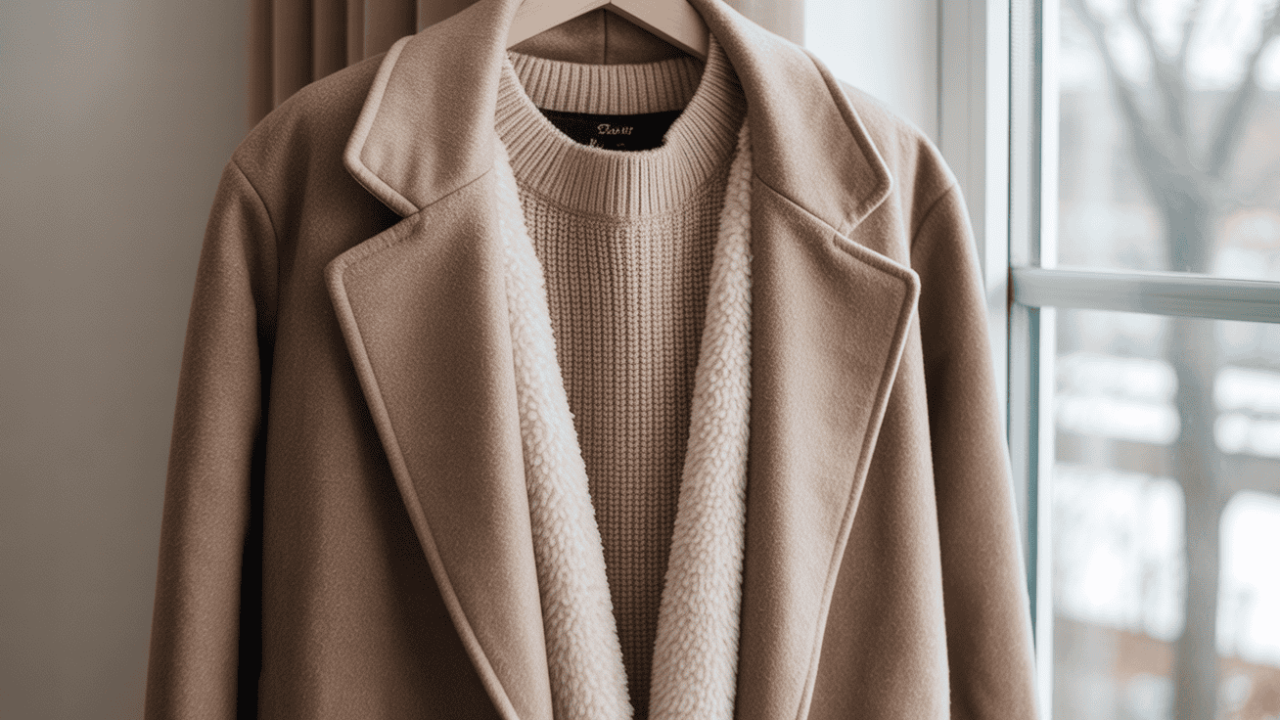
Winter dressing often feels like a trade-off. You either stay warm and end up looking like you’re wearing a sleeping bag, or you skip a layer and shiver through your commute. The good news is that looking bulky in winter isn’t actually about how many layers you wear — it’s about which layers you choose and how you combine them. With the right approach, you can stack three or four pieces and still look put together.
In this guide
- Why Layering Goes Wrong
- The Three-Layer Rule
- Fabric Choices Matter More Than Layer Count
- Pay Attention to Proportions
- Smart Layering Techniques
- Cold-Weather Layering for Extreme Temperatures
- Putting It All Together
Why Layering Goes Wrong
Most bulky winter outfits come down to one simple mistake: wearing pieces that are all the same thickness. When every layer is a thick knit or a puffy material, the volume adds up fast, and there’s nowhere for the fabric to go. Your arms feel stiff, your silhouette turns into a rectangle, and even a great coat can’t save the look.
The fix isn’t fewer layers. It’s variation. A well-layered winter outfit mixes thin, medium, and thick pieces so each one does a specific job instead of all of them fighting for the same space.
The Three-Layer Rule
A simple way to think about winter layering is to break it into three categories, each with its own purpose.
Base layer — This sits closest to your skin and manages temperature and moisture. Think thin, breathable materials like a fitted long-sleeve top, a lightweight turtleneck, or thermal wear. This layer should never add bulk; its job is warmth without width.
Mid layer — This is your insulation. A sweater, cardigan, or thin fleece works well here. The key is choosing something with a close-to-medium fit — not skin-tight, but not oversized either. If your mid layer is already loose, your coat will need extra room to fit over it, and that’s often where the bulky look starts.
Outer layer — This is your coat or jacket, and it should be the one piece that adds structure. A tailored wool coat, a slim puffer, or a longline trench all work as long as the shape holds. Structured shoulders and a defined waist (even a soft one) do more to keep you looking sharp than the coat’s thickness ever will.
When you follow this order — thin, medium, structured — you naturally avoid the “layer on top of layer of the same weight” problem that makes outfits look stuffed.
Fabric Choices Matter More Than Layer Count
Two people can wear the same three layers and look completely different, and the difference usually comes down to fabric. Bulky materials trap air and add visible volume, while dense, tightly woven fabrics stay warm without ballooning out.
For base layers, look for merino wool, modal, or moisture-wicking synthetics. For mid layers, a tightly knit sweater will always sit better under a coat than a chunky cable-knit one — save the chunky knits for days when you’re not layering a coat over them. For your outer coat, wool blends and structured synthetic fills (like those used in slim puffers) hold their shape better than loose down-filled styles, which tend to poof outward once you add a sweater underneath. If you want a deeper look at how different materials perform, our guide on how to choose outerwear fabric for different climates breaks it down by weather.
If you love a chunky knit, wear it as your outer layer on milder days instead of stacking it under a coat.
Pay Attention to Proportions
Bulk isn’t only about fabric — it’s also about how your layers are shaped relative to each other. A common styling trick is to balance volume: if your mid layer is slightly loose, choose a more fitted coat, and if your coat is roomier, keep the mid layer closer to the body.
Sleeves are often the biggest culprit. A thick sweater with wide sleeves under a coat with narrow sleeves creates an uncomfortable, bunched-up look at the wrists. Before buying a winter coat, try it on with the type of sweater you actually plan to wear underneath, not just a t-shirt. This one step avoids a lot of layering regret. Our guide to choosing the right coat for your body type goes further on how cut and length interact with what you wear underneath.
Necklines matter too. Stacking a turtleneck, a crew-neck sweater, and a coat with a high collar all at once can make your neck disappear into fabric. Instead, vary your necklines — a scoop-neck base layer under a crew-neck sweater under a coat with a simple collar gives your outfit breathing room near the face.
Smart Layering Techniques
A few practical techniques make a noticeable difference:
- Tuck strategically. Tucking your base layer or thin mid layer into your bottoms reduces fabric bunching at the waist, which keeps your coat lying flatter over your body.
- Use a belt. If your coat has a belt or tie, using it — even loosely — adds a waist definition that instantly cuts down on the “shapeless block” effect multiple layers can create.
- Layer lengths, not just thickness. A shorter mid layer under a longer coat (or vice versa) creates visual lines that break up bulk, rather than everything ending at the same point and creating one solid mass.
- Choose one statement layer. If your coat is bold or heavily textured, keep the layers underneath simple. If your coat is a plain, classic shape, that’s your chance to have more texture underneath.
Cold-Weather Layering for Extreme Temperatures
On the coldest days, it’s tempting to just add more of everything. Instead, add smarter layers. A thin thermal base layer can replace the need for two mid layers, since it’s designed to trap heat without adding visible thickness. Scarves, worn close to the neck rather than piled loosely, add warmth without the bulk of an extra sweater. Even glove and boot choices affect how “bulky” your whole outfit reads, since bulky hands and feet make the rest of the outfit look heavier than it is.
If you truly need extra insulation, consider a thin heat-tech style layer instead of a second sweater. It solves the temperature problem without adding the width problem. For general guidance on staying safe in serious cold, the National Weather Service also recommends dressing in layers and covering exposed skin.
Layering works hand in hand with a few other coat habits worth knowing. Our guide on how often should you dry clean a winter coat is a good next read, and for background, see how clothing insulation actually traps heat.
Putting It All Together
Layering coats in winter without looking bulky comes down to three habits: choosing fabrics with different weights and textures instead of stacking similar ones, paying attention to proportions between your mid layer and your coat, and using small styling details like belts, tucks, and varied necklines to keep everything looking intentional rather than piled on.
Once you get the combination right for your own wardrobe, you’ll find you can layer confidently through the coldest months without sacrificing how put-together you look. Warmth and style aren’t actually opposites in winter — they just require a little more thought about what goes where. And once you have a coat you love, our coat care guide will help it keep its shape for seasons to come.
If you want to go beyond a single coat, our guide to building a complete outerwear wardrobe with a simple layering system shows how base, mid, and outer layers fit together.
For the coldest days, our freezing-weather outfit formula shows how to adjust each layer by temperature.