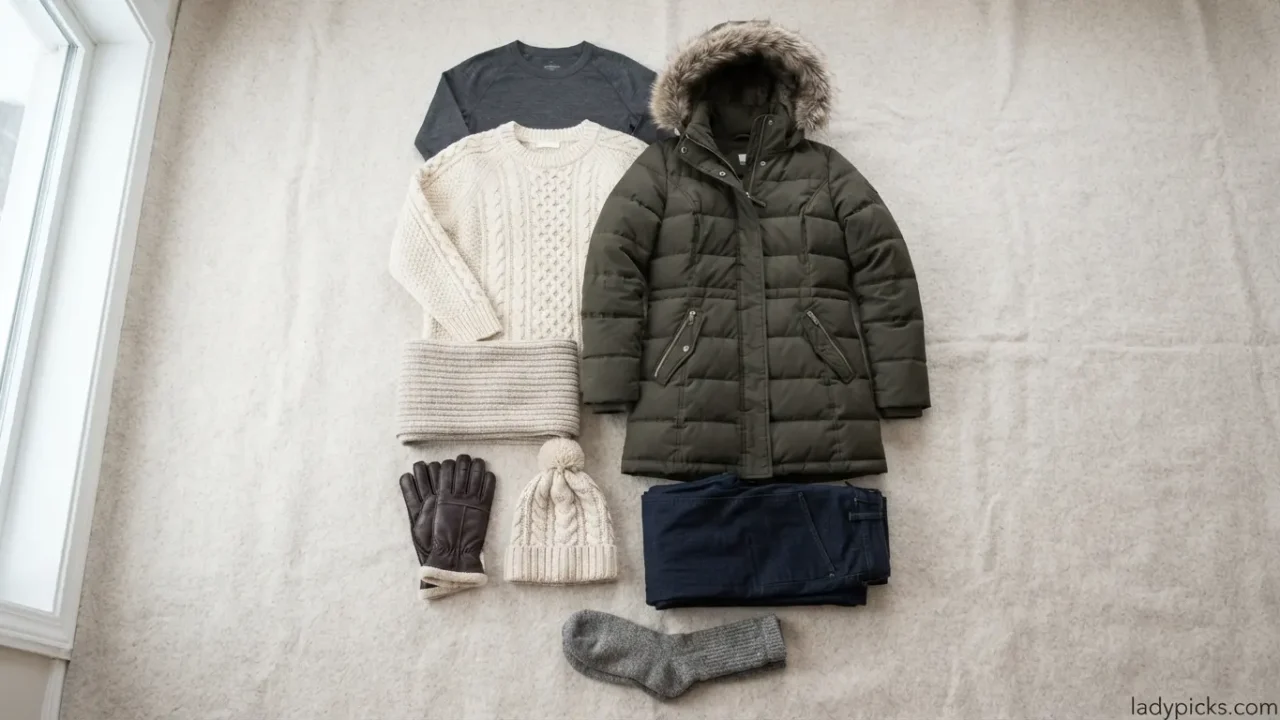
When the temperature drops to freezing or below, most people reach for the biggest coat they own and hope for the best. Sometimes that works, and sometimes you end up cold at the bus stop and sweating on the train. Dressing well for freezing weather isn’t about wearing more, it’s about wearing the right things in the right order. A simple formula, built from a few layers and a few details, takes the guesswork out of it and works whether you’re commuting, walking the dog, or standing at a weekend game.
In this guide
- The Formula in One Line
- Step One: A Base Layer That Handles Moisture
- Step Two: A Mid Layer That Holds Heat
- Step Three: An Insulated, Wind-Blocking Outer Layer
- Step Four: Protect Your Head, Hands, and Feet
- Adjust the Formula to the Temperature
- Adjust for What You'll Be Doing
- Use Zips and Vents to Fine-Tune
- Common Mistakes to Avoid
- Know the Warning Signs
- A Quick Freezing-Weather Checklist
- Final Thoughts
The Formula in One Line
Here’s the whole idea: base layer + warm mid layer + insulated outer layer + head, hands, and feet covered. Each part has a job. The base layer manages moisture, the mid layer holds in heat, the outer layer blocks wind and holds warmth, and the extras protect the parts of your body that lose heat fastest. Get all four right and you’ll be comfortable in most freezing conditions.
Step One: A Base Layer That Handles Moisture
The layer closest to your skin matters more than it looks. Its main task is to move sweat away from your body so you don’t end up damp, because damp skin gets cold quickly. Merino wool and synthetic fabrics do this well, while cotton holds moisture and stays wet. Choose a fitted long-sleeve top, and thermal leggings or long underwear for the legs if you’ll be outside for long.
The base layer should feel snug but comfortable, with no loose fabric bunching under the other layers.
Step Two: A Mid Layer That Holds Heat
The mid layer is where most of your warmth comes from. A wool sweater, fleece, or lightweight insulated vest works well. Thicker isn’t always better. A medium-weight mid layer that traps air without bulk is more comfortable than a very thick one that restricts movement and makes you overheat.
If you’re unsure how much room to leave for these layers, our guide on building the perfect outerwear wardrobe explains how base, mid, and outer layers fit together.
Step Three: An Insulated, Wind-Blocking Outer Layer
In freezing weather, wind can make the air feel much colder than the number on the thermometer. This effect is described by the wind chill concept, and it’s the reason a windproof outer layer matters. Choose a coat with a dense weave or a wind-blocking shell, and enough insulation for the temperature. A longer coat that covers your hips and thighs adds warmth to the parts that are otherwise exposed.
Whether you pick a puffer or a wool coat depends on your style and your day, and our comparison of puffer jacket vs wool coat can help you decide.
Step Four: Protect Your Head, Hands, and Feet
Even a great coat can’t make up for cold extremities. Your head, hands, and feet are often the first places to feel the cold. A warm hat that covers your ears, insulated gloves or mittens (mittens are generally warmer, since your fingers share heat), and a scarf or neck gaiter that covers your neck and chin make a big difference.
For feet, wear warm, moisture-wicking socks, ideally wool or a wool blend, and shoes or boots that are insulated and have a good grip on icy ground. Make sure your footwear isn’t too tight, since cramped toes have less circulation and get colder faster.
Adjust the Formula to the Temperature
The formula stays the same, but you adjust the weight of each part. Around freezing, a medium base layer, a sweater, and a regular winter coat are usually enough. At colder temperatures, you can step up to a thicker mid layer, a heavier coat, and warmer accessories. In very cold conditions, add thermal bottoms, a second pair of socks (if your boots have room), and a face covering. The key is to change the weight of the layers, rather than just adding more of the same.
Adjust for What You’ll Be Doing
How active you are changes what you need. If you’re standing still, such as waiting for a bus or watching an event, you’ll want more insulation, because your body isn’t producing much heat. If you’re walking briskly or exercising, you’ll want lighter layers that you can open or remove, because overheating leads to sweat, and sweat leads to a chill when you stop.
A good habit is to start slightly cool. If you feel perfectly warm the moment you step outside, you’ll probably be too warm ten minutes later.
Use Zips and Vents to Fine-Tune
Opening a zipper, lowering a hood, or pushing up a sleeve can regulate your temperature without taking anything off. Many winter coats have underarm vents or adjustable cuffs and hems for this purpose. Our guide on layering coats in winter without looking bulky has tips for keeping a layered outfit neat and manageable.
Common Mistakes to Avoid
A few habits tend to cause problems in freezing weather. Wearing cotton close to the skin, choosing tight boots, skipping gloves for a short trip, and wearing a coat that’s too small to fit layers beneath it are all common. Our guide on common outerwear mistakes and how to avoid them goes into more detail.
Know the Warning Signs
In very cold conditions, it’s important to pay attention to your body. Numbness, tingling, or skin that turns pale, hard, or waxy can be signs of frostbite, and shivering that won’t stop can signal that your body is losing heat. If you notice these signs, get somewhere warm, and seek medical help if symptoms are serious. Children and older adults can lose heat faster and need extra care.
A Quick Freezing-Weather Checklist
- A moisture-managing base layer, not cotton.
- A warm mid layer such as wool or fleece.
- An insulated, wind-blocking coat that covers your hips.
- A hat over your ears, warm gloves or mittens, and a scarf.
- Warm, dry socks and insulated boots with good grip.
- A way to adjust, like zips, vents, or a removable layer.
Final Thoughts
Dressing for freezing weather becomes easy once you have a formula to follow: manage moisture, hold in heat, block the wind, and protect your head, hands, and feet. Adjust the weight of each part to the temperature and to how active you’ll be, and you’ll stay comfortable without feeling weighed down. A little planning each morning is all it takes to enjoy the cold instead of just enduring it.