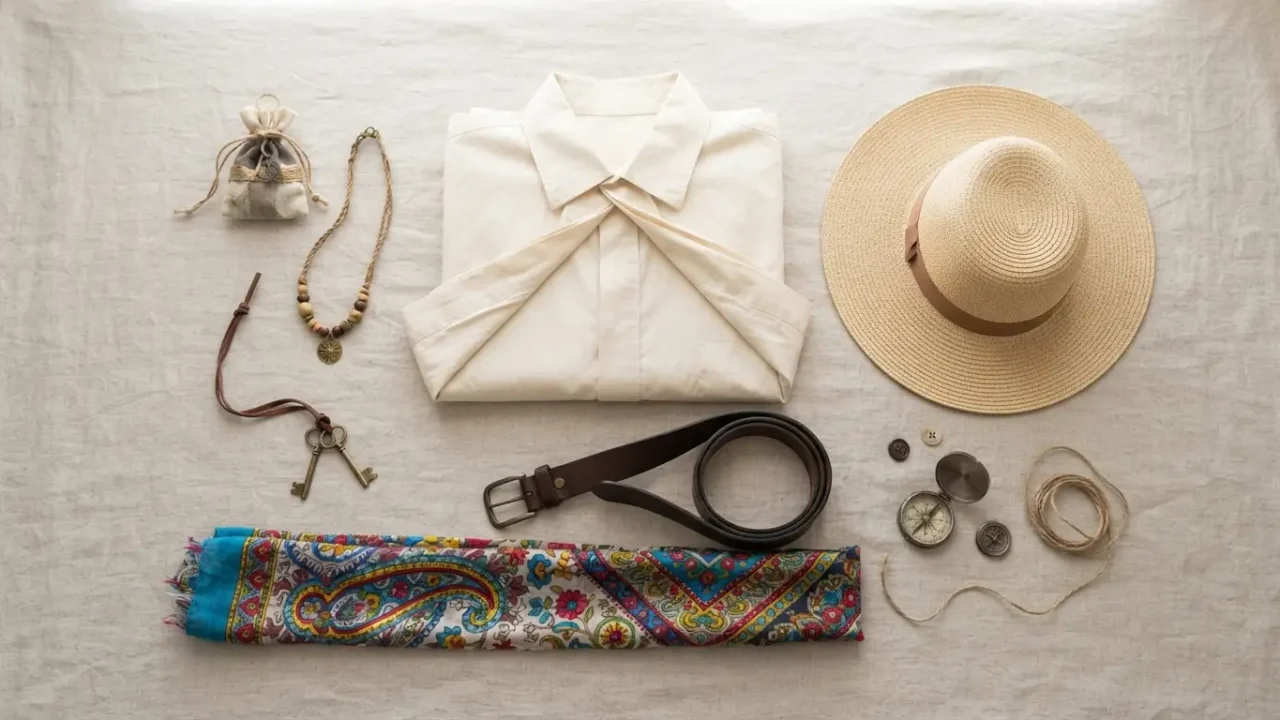
Some of the best costumes I’ve seen came together an hour before the party, built from whatever happened to be in the closet. A good costume doesn’t need a store trip or a big budget. It needs one clear idea and a few pieces that suggest it. If you look at your own wardrobe, linen cupboard, and junk drawer with fresh eyes, you probably already own most of what you need.
In this guide
- Start With the Idea, Not the Shopping List
- Raid the Closet for Instant Characters
- Turn Household Items Into Costume Pieces
- Use Makeup and Accessories to Finish the Look
- Upcycle and Swap Instead of Buying New
- No-Sew Techniques That Hold Up
- Group and Couple Ideas From Your Own Closets
- Keep Your Homemade Costume Looking Good
- Final Thoughts
Start With the Idea, Not the Shopping List
The trick to a good homemade costume is working backward from what you have. Instead of picking a costume and then buying everything it needs, spend five minutes looking through your clothes and household items and see what they suggest. A long black dress, a striped shirt, a wide-brimmed hat, and a pair of oversized glasses each hint at a character already.
Pick the one or two items that carry the most recognizable identity, then fill in around them. People identify costumes by a few strong signals, like a hat, a color, or a prop, more than by every small detail.
Raid the Closet for Instant Characters
Everyday clothing covers more costume ground than you’d expect. A few combinations work well with almost no effort:
- Classic cowboy or cowgirl: jeans, a plaid shirt, boots, a bandana, and a belt with a big buckle.
- Retro style icon: high-waisted pants or a swing skirt, a fitted top, a scarf tied in your hair, and bold lipstick.
- Detective: a trench coat or long jacket, a hat, a notebook, and a magnifying glass.
- Tourist: a bright shirt, shorts, socks with sandals, a camera around the neck, and a visor.
- Sports fan or athlete: a jersey, sweatbands, and a prop like a ball or foam finger.
These work because the clothes already look like a character. You’re mostly adding one or two details that make the idea obvious.
Turn Household Items Into Costume Pieces
The linen cupboard and kitchen are surprisingly useful. A plain bedsheet becomes a cape, a toga, or a ghost costume. A colorful tablecloth can be a skirt or a superhero cape. A pair of oven mitts and an apron make a quick chef. A colander on your head, with a bit of imagination, becomes a robot or space helmet.
Cardboard boxes are another classic. With some paint or markers, a box can become a robot, a vending machine, or a gift. Keep them light and make sure there’s enough room to move comfortably and see where you’re going.
Use Makeup and Accessories to Finish the Look
A little face paint or makeup can make a simple outfit feel like a full costume. A few painted whiskers and a headband of ears turn black clothes into a cat. Pale makeup with dark eyes and a long coat makes a vampire. If anyone in your group has sensitive skin, take a look at our guide to costume makeup tips for sensitive skin before you start.
Accessories carry a lot of weight too. A hat, scarf, pair of gloves, or piece of jewelry can signal a character on its own. Keep a small box of these items handy, since the same pieces can be reused across many looks.
Upcycle and Swap Instead of Buying New
When you do need something you don’t own, borrowing, thrifting, and swapping often beat buying new. Friends and family usually have spare hats, wigs, or jackets sitting unused. Thrift stores are a goldmine for oversized shirts, blazers, and unusual accessories at low prices. This approach also keeps clothes in use rather than creating more waste, and upcycling is a good way to think about it: giving existing items a second purpose.
If budget is your main concern, our guide on styling a Halloween costume for kids on a budget has more ideas for making a little go a long way.
No-Sew Techniques That Hold Up
You don’t need to sew to put a costume together. Safety pins, double-sided fashion tape, hot glue, and fabric glue handle most quick fixes. Safety pins are great for shortening a hem or fastening a cape on the inside where they don’t show. Fabric tape can hold a hem or attach trim without a needle.
Keep any pins or sharp fasteners away from skin, especially on kids’ costumes, and double-check that nothing can poke or come loose during the night. For a few more things worth checking before heading out, our costume safety checklist covers the essentials.
Group and Couple Ideas From Your Own Closets
Homemade costumes work well for groups, too, because each person can contribute their own pieces. A group of friends in matching colored T-shirts with simple props can become a crayon box, a deck of cards, or a set of paint swatches. Couples can pair up with items that go together, like a lock and key, salt and pepper, or a peanut butter and jelly sandwich built from cardboard and felt.
If you’re coordinating with a bigger group, our guide to planning a group costume theme everyone will love covers how to keep everyone involved and on budget.
Keep Your Homemade Costume Looking Good
A DIY costume held together with pins and glue needs a little extra care to survive a full night. Check your fastenings before you leave, bring a few spare safety pins, and avoid anything that restricts movement or visibility. If the costume needs to last through more than one event, our tips on making a costume last through multiple parties are worth a read.
When the season ends, put the pieces away carefully so you can reuse them next year. Our costume storage tips explain how to store everything so it stays in good shape.
Final Thoughts
A great costume doesn’t come from a package. It comes from a good idea, a few recognizable pieces, and a bit of creativity with what’s already around you. Start with what you own, add one or two small touches, and you’ll likely end up with a costume that’s more personal, and more fun to wear, than anything off the shelf. For a bit of background on how costumes work as a form of design and storytelling, this overview of costume design is a nice read.
If you have a packaged costume to improve rather than build from scratch, our guide on elevating a store-bought costume on a budget shows how.