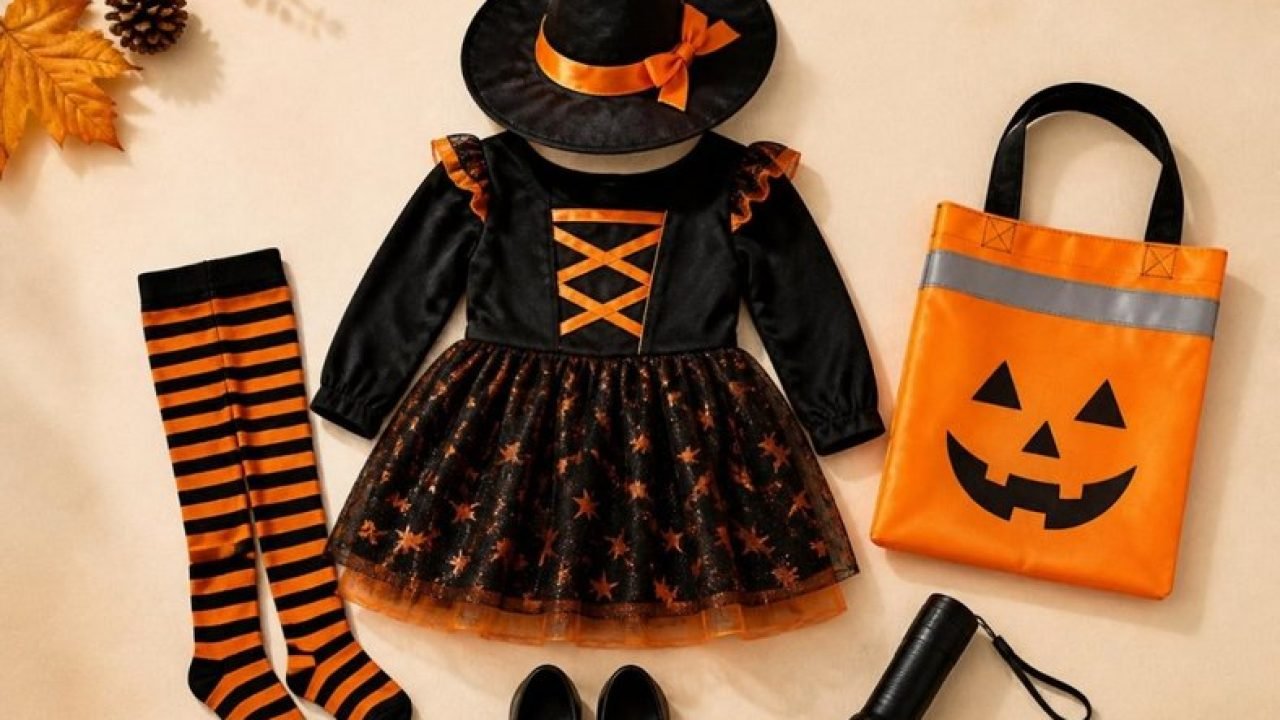
Every October the same scene plays out in a lot of homes. A child insists on wearing the cape that drags across the floor, or the mask that covers half their face, and a parent has to weigh a great costume against a safe one. These costume safety tips for kids are meant to make that call easier. You don’t have to take the fun out of dress-up. A few quick checks before the big night can head off most of the common problems, from trips and falls to itchy skin and poor visibility.
Use the sections below as a walk-through, or jump straight to the checklist at the end and keep it handy.
In this guide
- Start with fit and length
- Check the fabric and read the label
- Masks, face paint, and clear vision
- Watch out for props and small parts
- Make sure your child is easy to see
- Dress for the weather underneath
- Talk through the plan before you head out
- A quick checklist to run through
Start With Fit and Length
Most costume accidents are boring ones. A hem that’s too long catches a shoe, a sleeve slides over a hand, and a kid who was running a second ago is suddenly on the pavement. Fit is the first thing worth checking, and it takes about a minute.
Have your child put the costume on and walk around the room, then up and down a few stairs. The hem should sit at the ankle or higher, so feet are never tangled in fabric. If a costume comes a size too big, and plenty do, hem it up with fabric tape or a few safety pins on the inside instead of letting it pool around their shoes. Our guide to styling a Halloween costume for kids on a budget has more simple adjustments like this.
Capes, tutus, and long robes deserve extra attention. They look great in photos and they’re the pieces most likely to get stepped on. Shortening them by a few inches rarely changes how the costume looks, but it changes how easily your child can move.
Check the neckline, too. Anything tied snugly around the neck, like a stiff cape clasp, should come apart easily if it gets pulled. A loose ribbon tie or a Velcro closure is a safer choice than a tight knot.
Check the Fabric and Read the Label
Many store-bought costumes are made from lightweight synthetic fabric, and that kind of material can catch fire more easily than everyday clothes. Look for a label that says flame resistant. That wording isn’t a promise that a costume can’t burn, so it doesn’t make open flames safe, but it’s a better starting point than a costume with no information at all. The U.S. Consumer Product Safety Commission has more detail in its Halloween safety tips for choosing costumes.
The bigger habit is keeping costumes away from candles. A real candle inside a jack-o’-lantern is a classic hazard for a child in a flowing costume. Battery-powered LED lights give the same glow without the risk, and they cost only a few dollars.
It’s also worth unpacking a new costume a day or two ahead of time. Some have a strong chemical smell or a stiff, scratchy finish. Airing the costume out and trying it on early tells you whether your child can actually stand wearing it for a couple of hours. A costume that itches tends to end up on the floor by the third house anyway.
Masks, Face Paint, and Clear Vision
Masks look fantastic, but they can limit what a child sees and hears, especially at the edges, which is where cars and other kids tend to appear from. Before you commit, have your child wear the mask, then look left, right, and down. If they can’t see their feet or the sides clearly, the mask stays home.
Face paint or makeup is often the better option. It keeps the whole field of vision open and doesn’t slip around. Choose products labeled as safe for skin, and try a small patch on the inside of your child’s arm a day before Halloween. If redness or itching shows up, skip that product. Costume makeup should also come off before bed, using a gentle cleanser and a soft cloth.
One more thing to skip is decorative contact lenses. Lenses that change eye color or shape are sometimes sold as costume extras, but they can harm eyes when they aren’t fitted by an eye care professional. A little extra eyeliner does the same job with far less risk.
Watch Out for Props and Small Parts
Swords, wands, pitchforks, and wizard staffs are a big part of the fun, and also the pieces most likely to poke someone. Choose props made of soft foam or flexible plastic, with rounded ends and no sharp points. Keep them short enough that a child won’t trip over them or swing them into a friend’s face.
If there are kids under three in the house, check every costume accessory for small parts that could come loose, like buttons, beads, or plastic gems. These are easy for little ones to swallow. Light-up accessories deserve a look as well. Make sure the battery compartment closes securely, since small button batteries are dangerous if swallowed.
Finally, take a quick look at cords, straps, and strings. Long strings around the neck, like the ones on some hoods or bags, can snag on things. Shorter or breakaway options are safer.
Make Sure Your Child Is Easy to See
Halloween happens after dark, and a lot of costumes are black, brown, or dark green. That’s a problem on streets where drivers are watching for pedestrians. Light-colored costumes help, but you don’t have to change the whole outfit to fix it.
Reflective tape is the easiest solution. A few strips on the back of the costume, on the trick-or-treat bag, and around the shoes show up clearly in headlights. Glow sticks add to that, and they double as something fun for kids to hold. A small flashlight helps them see where they’re stepping, too.
Whatever the costume, stick to sidewalks when possible, cross at corners, and remind everyone to look both ways before stepping off the curb. Younger children should always go out with an adult.
Dress for the Weather Underneath
A cute costume doesn’t help much if your child is freezing by the third street. Plan the costume to fit over regular clothes, like leggings and a long-sleeve shirt, rather than choosing something so tight or so thin that there’s no room for layers. If the evening is cold, a warm base layer under the costume does the job without spoiling the look.
For chillier nights, our guide on how to layer coats in winter without looking bulky has a few ideas that carry over well, especially the advice about mixing thin and thicker layers. Comfortable, closed-toe shoes matter too. Sandals, costume boots with slippery soles, and heels are all asking for a twisted ankle.
Talk Through the Plan Before You Head Out
Costume safety isn’t only about the outfit. A short conversation before you leave the house helps just as much. Explain the ground rules in plain language: stay with the group, walk instead of run, and only visit homes with the porch light on.
For younger children, write your phone number on a card and tuck it in a costume pocket, or on the inside of a sleeve. If someone gets separated from the group, that small step saves a lot of stress.
When you get home, sort through the candy before anyone starts eating it. Set aside anything that’s unwrapped or looks tampered with, and check labels if your child has a food allergy. It only takes a few minutes, and it lets the evening end on a good note.
A Quick Checklist to Run Through
Here’s the short version to use on the night itself. Go down the list before you walk out the door.
- The hem is at the ankle or above, and sleeves don’t cover the hands.
- The costume has a flame-resistant label, and candles are nowhere near.
- Your child can see clearly to both sides and downward.
- Face paint or makeup was patch-tested and is made for skin.
- Props are soft, short, and free of sharp points.
- Accessories have no loose small parts, and battery compartments are closed.
- Reflective tape, glow sticks, or a flashlight are in place.
- There’s a warm layer underneath, plus comfortable closed-toe shoes.
- Your child knows the ground rules, and a phone number is tucked in a pocket.
A Few Final Thoughts
None of these steps takes long, and most of them can be done the same afternoon you’re putting the costume together. The goal isn’t a perfect setup. It’s a costume your child can move in, see out of, and stay comfortable wearing, so the whole evening can just be about candy and fun. Once the night is over, our tips on storing costumes so they last year after year will help the outfit survive for next season.
If you only have time for three things, check the hem, check the visibility, and add some reflective tape. Those quick fixes cover a surprising amount of ground, and they’ll get you out the door with a little more confidence and a lot less to worry about.
A safe costume is also one that’s planned and cared for well before and after the big night. For background, see the U.S. Consumer Product Safety Commission's seasonal safety guidance.
If a costume relies on face paint, our guide on costume makeup tips for sensitive skin covers patch testing and gentle removal in more detail.
Have a little one under three? Our guide on choosing safe costume accessories for toddlers covers the extra checks they need.