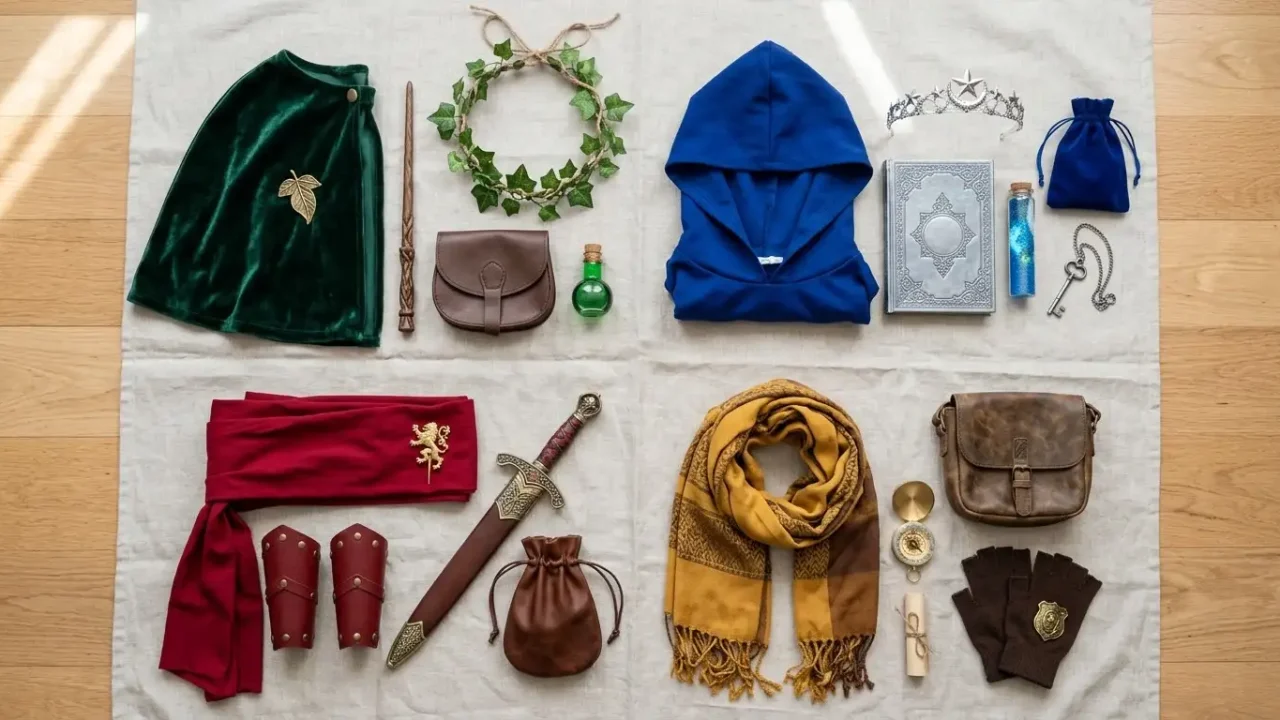
Group costumes are one of the most fun parts of Halloween, right up until someone drops out, the budgets don’t match, or half the group shows up in something that doesn’t quite fit the theme. A group costume that actually comes together well usually isn’t luck, it’s a little bit of planning done early enough that everyone has time to prepare without scrambling the night before.
In this guide
- Start With a Concept Everyone Can Get Behind
- Account for Different Budgets Early
- Assign Roles Based on What People Actually Have or Want
- Lock In Sizing and Fit Details Early
- Plan for the One or Two People Who Join Late
- Coordinate Without Requiring an Exact Match
- Set a Group Check-In a Week Before
- Final Thoughts
Start With a Concept Everyone Can Get Behind
The best group themes work because every person in the group genuinely wants to participate, not because one enthusiastic organizer talked everyone into it. Before locking in an idea, float two or three options and let the group weigh in, rather than announcing a single theme and hoping for buy-in after the fact.
Themes that tend to work well for groups include recognizable characters from a single show or movie (so each person gets a distinct, identifiable role), a shared concept like decades or colors, or a punny group idea where each person represents one part of a phrase. The common thread across good group themes is that everyone gets something they’re excited to wear, rather than one or two people getting the fun roles while others end up with an afterthought costume.
Account for Different Budgets Early
Group costumes can get expensive fast, especially if the theme requires specific purchased pieces for everyone. Bringing up budget early, even just a rough range, avoids the awkward situation of one person assuming a fully store-bought costume while another was planning to DIY on a tight budget.
A theme that works at multiple budget levels, where some pieces can be thrifted or made at home and others bought outright, is usually more inclusive than one that only works if everyone spends the same amount. If budget flexibility matters to your group, styling a costume on a budget has ideas that scale well even for adult group costumes.
Assign Roles Based on What People Actually Have or Want
Rather than randomly assigning who plays which character or role, it often works better to let people choose based on what they already own, what colors they feel comfortable wearing, or which character genuinely excites them. Someone who already owns a red jacket will have an easier and cheaper time with a role that calls for red than someone starting from scratch.
This approach also reduces the odds of a last-minute costume disaster, since people are more likely to follow through on preparing a costume they picked for themselves rather than one assigned to them.
Lock In Sizing and Fit Details Early
If the theme involves any matching purchased pieces, like identical jackets, shirts, or accessories, collecting sizes from everyone well before ordering avoids the scramble of rush shipping or settling for whatever size is left in stock. This is especially important for costumes ordered online, where sizing can run differently between brands.
For costumes with more flexible, DIY-friendly pieces, this is less of a concern, but it’s still worth confirming that everyone has what they need (a base garment in the right color, for example) with enough lead time to make adjustments if something doesn’t work out.
Plan for the One or Two People Who Join Late
Almost every group costume ends up with at least one person who commits later than everyone else, whether due to scheduling, budget, or just being slower to decide. Building in a flexible role or two, something that doesn’t require a specific purchased item and can be put together from things people likely already own, means a late addition doesn’t throw off the whole theme or feel left out of it.
It also helps to have a backup plan for the role itself. If the theme has a character that’s hard to source accessories for, identifying an easier substitute character or role from the same theme ahead of time means a late joiner has an easy option rather than scrambling to recreate the hardest costume in the group on short notice.
Coordinate Without Requiring an Exact Match
A group costume doesn’t need every single detail to match perfectly to read as a cohesive group. Often, a shared color palette, a common accessory, or consistent props do more to tie a group together visually than requiring everyone to buy the exact same costume. This approach is also more forgiving of different budgets, body types, and personal style preferences within the group.
Photos tend to look better with this kind of loose coordination too, since slight variation reads as a styled group rather than a uniform, which can actually look more intentional than an exact match.
Set a Group Check-In a Week Before
A short check-in, even just a group chat message, about a week before the event gives everyone a chance to flag any last-minute issues: a costume piece that didn’t arrive, a size that didn’t work out, or someone who’s had to drop their planned role. A week out still leaves enough time to problem-solve, whereas finding out the night before leaves almost no options.
This check-in is also a good moment to confirm logistics beyond the costumes themselves, like where everyone’s meeting, what time, and whether there’s a plan for photos as a group before the night gets busy.
Final Thoughts
A group costume that comes together smoothly usually comes down to picking a theme the whole group is actually excited about, being upfront about budget, and building in a little flexibility for the people who join the plan late. None of this requires much extra effort, mostly just a conversation or two before everyone starts buying and building. Once costumes are finalized, our costume safety checklist and our guide on making costumes last through multiple parties are both worth a look if the group has more than one event on the calendar this season.
For inspiration on group costume themes by category, this overview of Halloween costume traditions is a useful starting point for understanding where a lot of popular group concepts originally came from.