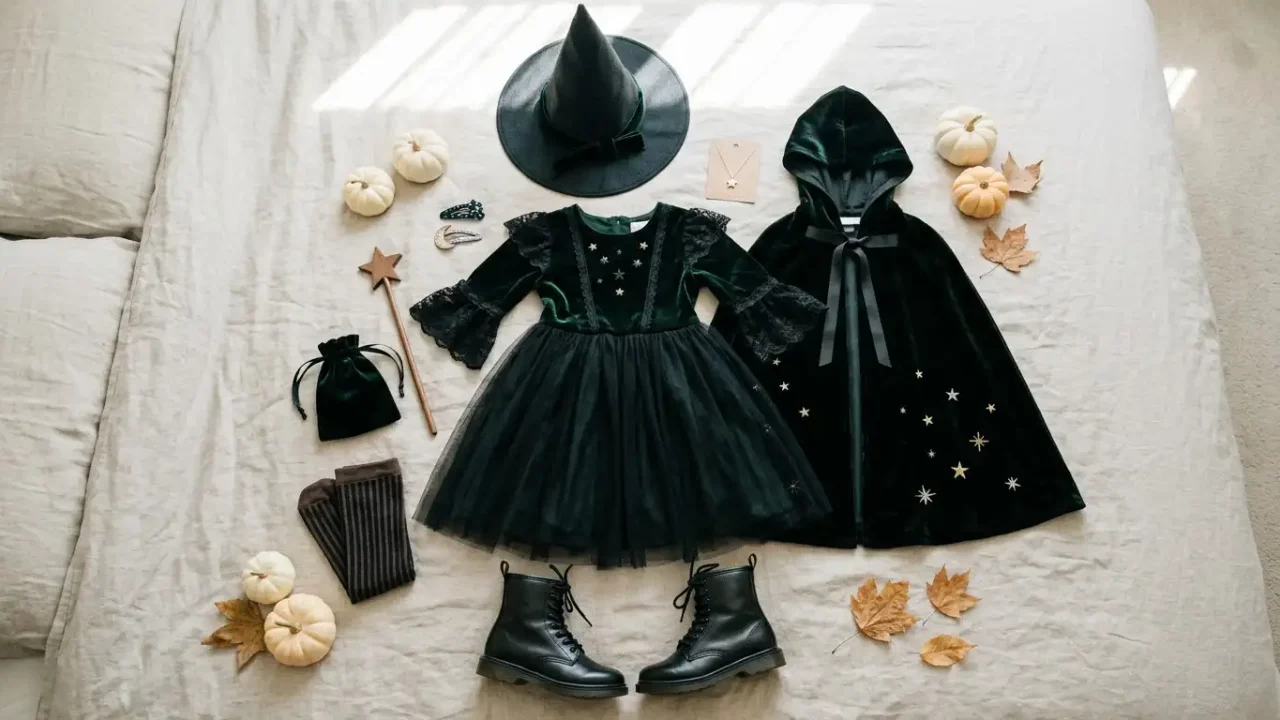
If Halloween in your house means more than one event, a school party, a neighborhood trick-or-treat, maybe a friend’s costume bash the weekend before, a single costume often has to survive several wears in the span of a week or two. That’s a lot to ask of fabric that was maybe never built for heavy use in the first place. A little care between wears makes the difference between a costume that still looks sharp at the third party and one that’s visibly falling apart by the second.
In this guide
- Do a Quick Check After Every Wear
- Spot-Clean Instead of Full Washing Between Wears
- Air It Out Between Events
- Reinforce Weak Points Before They Fail
- Protect Makeup-Adjacent Areas
- Store It Properly Between Events, Not Just After the Season
- Have a Backup Plan for Accessories
- Know When to Simplify Rather Than Repair
- Final Thoughts
Do a Quick Check After Every Wear
The easiest habit to build is also the one most people skip: taking two minutes right after a costume comes off to check it over. Look for loose threads, a popped seam, a stain that’s starting to set, or an accessory that’s come unglued. Catching these early means a five-minute fix instead of a costume that’s unwearable by the next event.
This is especially worth doing with kids’ costumes, since a day of running around, sitting on the ground, or wrestling with friends puts more strain on seams and trims than most costumes are designed to handle in one go, let alone three or four times.
Spot-Clean Instead of Full Washing Between Wears
Washing a costume fully between every single wear is usually more harmful than helpful, especially for costumes with glued-on details, sequins, or delicate trim that can come loose in a washing machine. Spot-cleaning is almost always the better move when you’ve only got a day or two before the next event.
For small marks, a damp cloth with a little mild soap, blotted rather than rubbed, usually lifts the stain without soaking the whole costume. Test on a hidden area first if you’re unsure how the fabric or any decoration will react. Let the spot dry fully before the costume goes back in a bag or closet, since packing anything away damp invites a musty smell by the next wear.
Air It Out Between Events
A costume that goes straight from one event into a sealed bag often comes out smelling like it the next time it’s needed. Hanging the costume somewhere with decent airflow for a few hours, or overnight if there’s time, lets any trapped moisture and odor dissipate before the next wear. This matters more than it seems, especially with costumes worn over a warmer base layer or during active play.
Reinforce Weak Points Before They Fail
Certain spots on a costume tend to take the most stress: shoulder seams, anywhere with a snap or button, and any point where an accessory attaches to the main piece. If you notice a seam starting to pull or a button hanging by a thread, reinforcing it before the next wear, rather than waiting for it to actually tear, saves a lot of last-minute scrambling.
A few stitches with a needle and thread, or a dab of fabric glue for a quick fix, takes less time than it sounds like and can be the difference between a costume lasting through all three parties or giving out halfway through the second one.
Protect Makeup-Adjacent Areas
Costumes worn with face paint or makeup often pick up smudges around the collar or hood, especially with younger kids who aren’t always careful about where their painted face ends up. A thin barrier, like a soft scarf or a cloth tucked just inside the collar while the costume is being put on and taken off, can keep makeup off the fabric in the first place, which saves a cleaning step entirely.
If makeup does transfer onto fabric, treat it as soon as possible rather than letting it sit. The longer makeup sits on fabric, the more likely it is to set in permanently, especially on lighter-colored costumes.
Store It Properly Between Events, Not Just After the Season
It’s easy to think about proper storage only once Halloween is completely over, but how a costume is kept between back-to-back parties matters too. A costume crumpled into a bag for a few days between events can develop wrinkles and creases that are harder to deal with than if it had just been hung up.
Hanging the costume, even loosely, between wears keeps its shape and reduces the ironing or steaming needed before the next event. If hanging space isn’t available, laying it flat somewhere it won’t get sat on or crushed is the next best option.
Have a Backup Plan for Accessories
Small accessories, wands, masks, clip-on pieces, are the most likely things to get lost or damaged between events, especially with kids who tend to set things down and forget where. Keeping all the small pieces together in one labeled bag between wears, rather than scattered wherever they ended up after the last party, saves a scramble on the morning of the next event.
If a small accessory does break, a quick glance at what’s on hand at home, extra buttons, ribbon, craft supplies, can often patch it well enough to get through the rest of the season, even if it’s not a perfect repair.
Know When to Simplify Rather Than Repair
Sometimes a costume just isn’t going to hold up for a third wear, and that’s fine. If a repair would take more effort than it’s worth, it’s often easier to simplify the look for the final event rather than force a damaged piece to keep going. A torn cape might get swapped for a simpler accessory, or a costume with a broken piece might just lose that one element for the last party without anyone really noticing.
This mindset takes some of the pressure off trying to keep every costume perfect through every single event, and it’s a more realistic approach than assuming everything needs to look brand new each time.
Final Thoughts
Getting a costume through multiple parties comes down to small habits repeated consistently: checking it over after each wear, spot-cleaning instead of fully washing, airing it out, and catching small damage before it becomes a bigger problem. None of these steps take long on their own, but together they’re what separates a costume that looks tired by the second event from one that’s still holding up fine for the third.
Once the season wraps up, our guide on costume storage tips covers how to pack everything away properly so it’s ready to go again next year, and our costume safety checklist is worth a look before the first party if you haven’t already gone through it. If you’re still finishing out a budget-friendly costume lineup, styling a costume on a budget has some ideas that pair well with keeping pieces reusable across events.
For general fabric stain removal basics that apply well beyond Halloween, the American Cleaning Institute’s stain removal guide is a solid reference to keep bookmarked through the season.