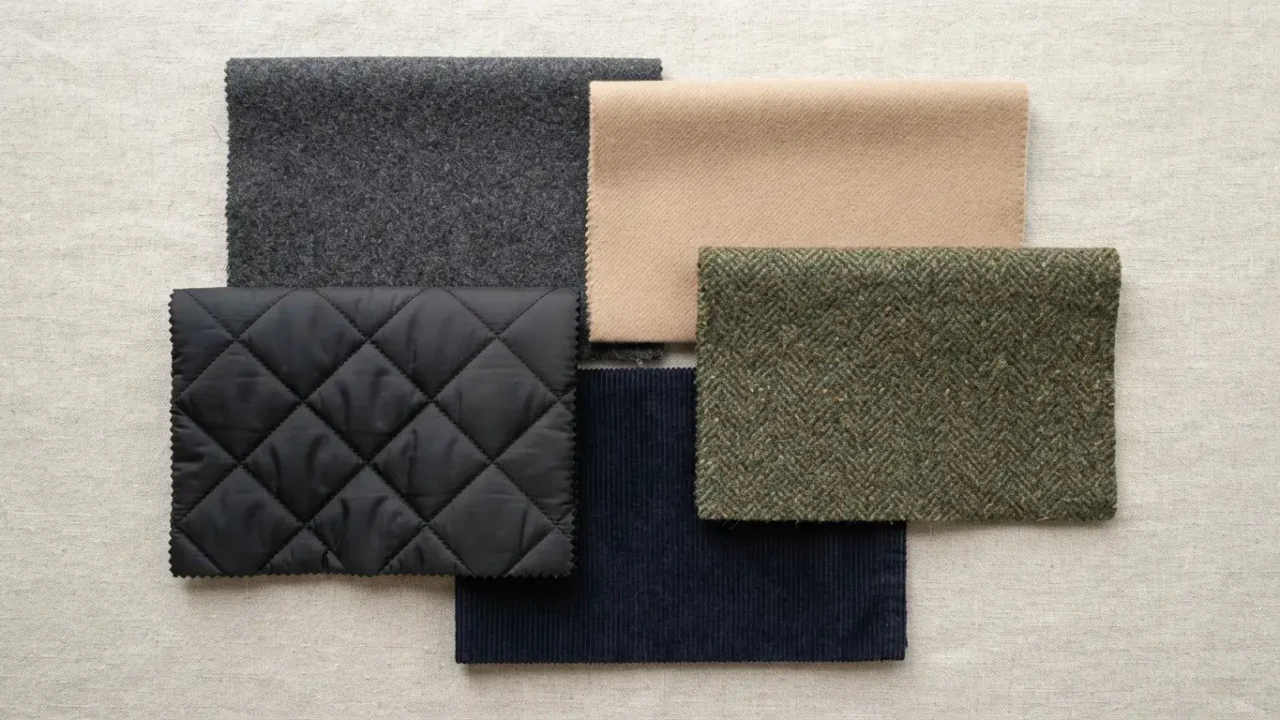
Walk into any coat section and the tags start throwing words at you: wool blend, bouclé, melton, cashmere, tweed, polyester, nylon. It can feel like a language you were supposed to learn in school. The good news is that you don’t need to memorize all of it. A handful of fabric types cover most of what’s on the rack, and once you know what each one is good (and not so good) at, reading a coat label gets a lot easier.
In this guide
- Why the Fabric Matters More Than the Brand
- Wool: The Classic Choice
- Wool Blends: Practical and Often Smarter
- Cashmere: Soft, Warm, and Delicate
- Tweed: Textured and Hardwearing
- Bouclé and Textured Fabrics
- Synthetic Fabrics: Polyester, Nylon, and Friends
- Corduroy, Cotton, and Canvas
- Reading the Label Like a Pro
- Matching Fabric to Your Life
- Caring for Your Coat Fabric
- Final Thoughts
Why the Fabric Matters More Than the Brand
Two coats can look nearly identical on a hanger and behave completely differently once you wear them. The fabric decides how warm the coat is, how it handles rain, how it wrinkles, how it ages, and how much care it needs. A beautiful cut in the wrong fabric for your climate or lifestyle will end up hanging unworn, while a plain coat in the right fabric becomes the one you reach for every day.
Wool: The Classic Choice
Wool is the fabric most people picture when they think of a traditional winter coat, and for good reason. The natural fiber traps warmth, resists light moisture, and holds its shape well over years of wear. A good wool coat can last a decade or more, which makes it one of the better investments in a wardrobe.
Not all wool is the same, though. Quality depends on the fiber length and how tightly it’s woven. Shorter, coarser fibers can feel scratchy and pill faster, while longer, finer fibers feel smoother and wear better. The weight matters too. A heavy wool is warmer and more structured, while a lighter wool drapes more softly and suits milder winters.
Wool Blends: Practical and Often Smarter
Many coats are labeled as wool blends, meaning wool mixed with another fiber such as polyester or nylon. Blends get a bad reputation, but they’re often a sensible choice. Adding a small amount of synthetic fiber can make a coat more durable, more wrinkle-resistant, and easier to care for, and it usually brings the price down as well.
As a rough guide, a coat with a high percentage of wool (around 70 percent or more) keeps most of wool’s natural warmth and feel. A coat with a much lower wool percentage will behave more like the synthetic part of the blend, so it’s worth checking the label rather than assuming.
Cashmere: Soft, Warm, and Delicate
Cashmere comes from the fine undercoat of cashmere goats, and it’s prized for being very soft and surprisingly warm for its weight. It’s also more delicate than regular wool. Cashmere coats tend to show wear sooner, pill more easily, and need gentler care, which is part of why they cost more.
Many coats use a wool and cashmere blend, which gives some of the softness of cashmere with better durability than pure cashmere. If you want the feel without the full price or fragility, a blend is often the sweet spot.
Tweed: Textured and Hardwearing
Tweed is a rough, textured woolen fabric traditionally associated with outdoor wear, and it’s known for being sturdy and warm. The flecked, woven look gives a coat a classic, slightly rustic character that works well for both casual and smart outfits.
Because it’s a thick, tightly woven fabric, tweed holds its shape well and hides small marks easily. The trade-off is weight, since a tweed coat usually feels heavier than a smooth wool of similar warmth.
Bouclé and Textured Fabrics
Bouclé is a looped, nubby fabric that gives a coat a soft, textured surface. It’s a popular look in current coat styles, and it’s usually made from wool, cotton, or a blend. The loops create a cozy appearance, but they can also snag on rough surfaces, so it’s worth being careful with bags, straps, and jewelry.
Synthetic Fabrics: Polyester, Nylon, and Friends
Synthetic fabrics like polyester and nylon dominate puffer jackets and technical outerwear. They’re lightweight, resist water better than natural fibers, dry quickly, and tend to cost less. For wet or unpredictable weather, a synthetic shell is often the practical choice.
The downsides are breathability and feel. Some synthetics trap heat and moisture, which can leave you clammy during activity, and they can feel less luxurious than natural fibers. They also don’t age the way wool does, and a worn synthetic coat tends to look tired rather than characterful.
Corduroy, Cotton, and Canvas
Cotton-based coat fabrics, such as corduroy, canvas, and gabardine, are more common in transitional-weather jackets than in true winter coats. They’re breathable and comfortable, and many have a casual, workwear feel. Waxed cotton adds water resistance, though it needs occasional re-waxing to stay effective.
These fabrics aren’t very warm on their own, so they usually work best layered over a sweater or paired with a lining for colder days.
Reading the Label Like a Pro
A coat’s care label is the most honest summary of what you’re buying. Look at the fiber content first, then the lining, since a warm outer fabric with a thin lining can still feel cold. Check the care instructions as well. A coat that requires dry cleaning only is a different ongoing commitment from one you can spot clean at home.
It also helps to feel the fabric in person when you can. A dense, even weave with a smooth surface usually signals better quality than a thin, loosely woven fabric with visible gaps.
Matching Fabric to Your Life
The right fabric depends on how you’ll use the coat. For a cold, dry climate and long-term wear, a heavy wool or wool blend is hard to beat. For rain and variable weather, a synthetic shell or a treated fabric makes more sense. For a polished work coat, a smooth, well-woven wool in a classic cut is a safe bet.
If you’re still comparing insulation types, our breakdown of wool vs down vs synthetic coat fill goes deeper on what goes inside the coat, while our guide on choosing outerwear fabric for different climates helps match the outer material to your weather.
Caring for Your Coat Fabric
Each fabric ages best with the right care. Wool likes to be brushed and aired rather than washed often, cashmere needs gentle handling, and synthetics usually tolerate more frequent cleaning. Our coat care guide covers the everyday habits that keep most fabrics looking good for years.
Final Thoughts
Coat fabrics aren’t as complicated as the labels make them sound. Wool for classic warmth, blends for practicality, cashmere for softness, tweed and bouclé for texture, and synthetics for weather resistance cover most of what you’ll see. Once you know what each one does well, it’s much easier to choose a coat that suits your climate, your budget, and your daily routine. And if you’re also weighing up the cut, our guide on choosing the right coat for your body type pairs nicely with this one.
For more background on how wool is produced and why it behaves the way it does, this overview of wool as a textile fiber is a helpful reference.
Ready to shop? Our checklist on how to spot a high-quality coat before you buy puts these fabric basics to practical use.
To see these fabrics side by side in a real buying decision, read puffer jacket vs wool coat: which should you buy.