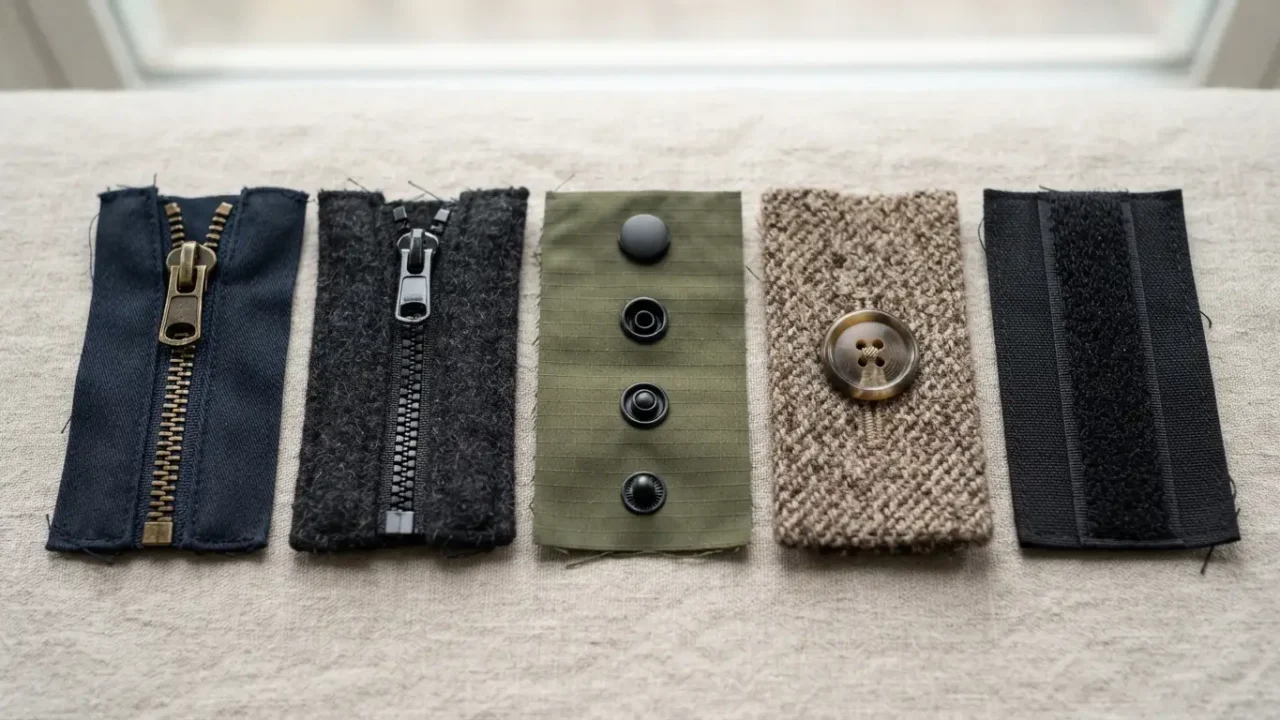
Closures are the part of a jacket most people notice only when something goes wrong. A zipper that splits open, a snap that won’t stay shut, or a button hanging by one thread can turn a good coat into a frustrating one. Yet closures also do a lot of quiet work: they keep out wind and rain, hold the coat’s shape, and decide how easy it is to get in and out of in a hurry. Knowing the main types, and what each one is good for, makes it easier to choose a jacket that works well and keeps working.
In this guide
- Why Closures Matter More Than You Think
- Zippers: The Most Common Closure
- Useful Zipper Features
- Snaps and Press Studs
- Buttons
- Toggles, Hooks, and Hook-and-Loop
- Drawcords, Toggles, and Adjusters
- How to Keep Closures Working
- Repair or Replace?
- Final Thoughts
Why Closures Matter More Than You Think
Fabric and insulation get most of the attention when people shop for outerwear, but the closure is where cold air and water most often find a way in. It also tends to be the first thing to fail. A jacket with excellent fabric and a flimsy zipper is a poor purchase, because a zipper repair or replacement can cost a surprising amount compared with the price of the coat.
If you want a broader view of what to look for when buying, our checklist on how to spot a high-quality coat before you buy includes closures alongside stitching, fabric, and lining.
Zippers: The Most Common Closure
The zipper is the standard closure on most casual and technical jackets, and there are a few main kinds. Coil zippers use a continuous spiral of nylon or polyester and tend to be flexible and fairly forgiving. Molded plastic zippers have individual plastic teeth, which are sturdy and common on heavier jackets. Metal zippers have a classic look and a reputation for durability, though they can be heavier and sometimes feel cold to the touch.
When you test a zipper, run it up and down a few times. It should glide smoothly without catching, and the slider should hold firmly in place once pulled up rather than drifting down. Check that the teeth line up neatly and that the fabric tape on either side is attached with tidy stitching.
Useful Zipper Features
A few extra details can make a zipper far more practical. A storm flap is a strip of fabric that covers the zipper, helping block wind and rain. A zipper garage is a small pocket at the top of the zipper where the pull tucks in, which prevents it from rubbing your chin. Two-way zippers open from the bottom as well as the top, making a long coat more comfortable when you sit down. Water-resistant zippers have a coating or a rubbery finish that helps keep moisture out, which matters on a rain jacket. For more on how waterproofing claims work, our guide on waterproof vs water-resistant jacket ratings explains the labels.
Snaps and Press Studs
A snap fastener, also called a press stud, closes with a quick push and opens with a pull. Snaps are common on storm flaps, pockets, and cuffs, and they’re popular on workwear and raincoats because they’re quick and easy to use with gloves on. A good snap closes with a firm, definite click and doesn’t pop open when the jacket moves.
Check that the snaps are firmly attached to the fabric, with no wobble, and that the fabric around them isn’t stretched or torn. Snaps can be replaced fairly cheaply with a simple kit, which makes them one of the easier closures to repair.
Buttons
Buttons are the traditional choice for wool coats, trench coats, and peacoats. They look smart, but they take a little longer to fasten, especially in the cold. The material matters: horn, wood, and metal buttons tend to feel more substantial than thin plastic ones, though good plastic buttons can be perfectly durable.
The quality of the stitching matters just as much as the button itself. Look for buttons sewn on with a short stem of thread, called a shank, which gives the fabric room to sit flat underneath. Many well-made coats include a small spare button inside the lining, which is worth keeping.
Toggles, Hooks, and Hook-and-Loop
Toggles are chunky closures common on duffle coats, and they’re easy to use with bulky gloves. Hooks and eyes are a discreet, strong closure often used at the top of a collar or on a tailored coat. Hook-and-loop fasteners are quick and adjustable, which makes them handy on cuffs and storm flaps, but they can collect lint and snag delicate fabrics, so keep them closed when washing.
Drawcords, Toggles, and Adjusters
Many jackets have drawcords at the hood, waist, or hem, with cord locks to hold them in place. They’re a useful way to seal out drafts and adjust the fit. One safety note: drawstrings at the neck and hood can be a hazard on children’s clothing, so it’s worth choosing styles without them for kids.
How to Keep Closures Working
A little care keeps closures going for years. Keep zippers clean by brushing out grit and lint, and rinse off salt after winter walks. If a zipper feels stiff, a bit of zipper lubricant or a wax stick rubbed along the teeth often helps. Don’t force a stuck zipper, since pulling hard can bend the teeth or break the slider. Close zippers and fasteners before washing so they don’t snag the fabric or each other. For more everyday habits, our coat care guide covers the basics.
Repair or Replace?
A broken slider or a missing snap is usually worth fixing, especially on a coat you like. A tailor or repair shop can replace a zipper, though full replacement on a long coat zipper can cost a fair amount. If the zipper problem arrives alongside thinning insulation, worn fabric, or failing waterproofing, it may be time to move on, and our guide on the signs it’s time to replace your outerwear can help you decide.
Final Thoughts
Closures are small, but they decide a lot about how a jacket performs day to day. Zippers suit most everyday and technical jackets, snaps and hook-and-loop add quick, glove-friendly security, and buttons and toggles bring a classic look to wool and duffle coats. Test them in the store, choose the type that suits how you’ll use the jacket, and give them a little care, and they’ll keep doing their job for many winters.