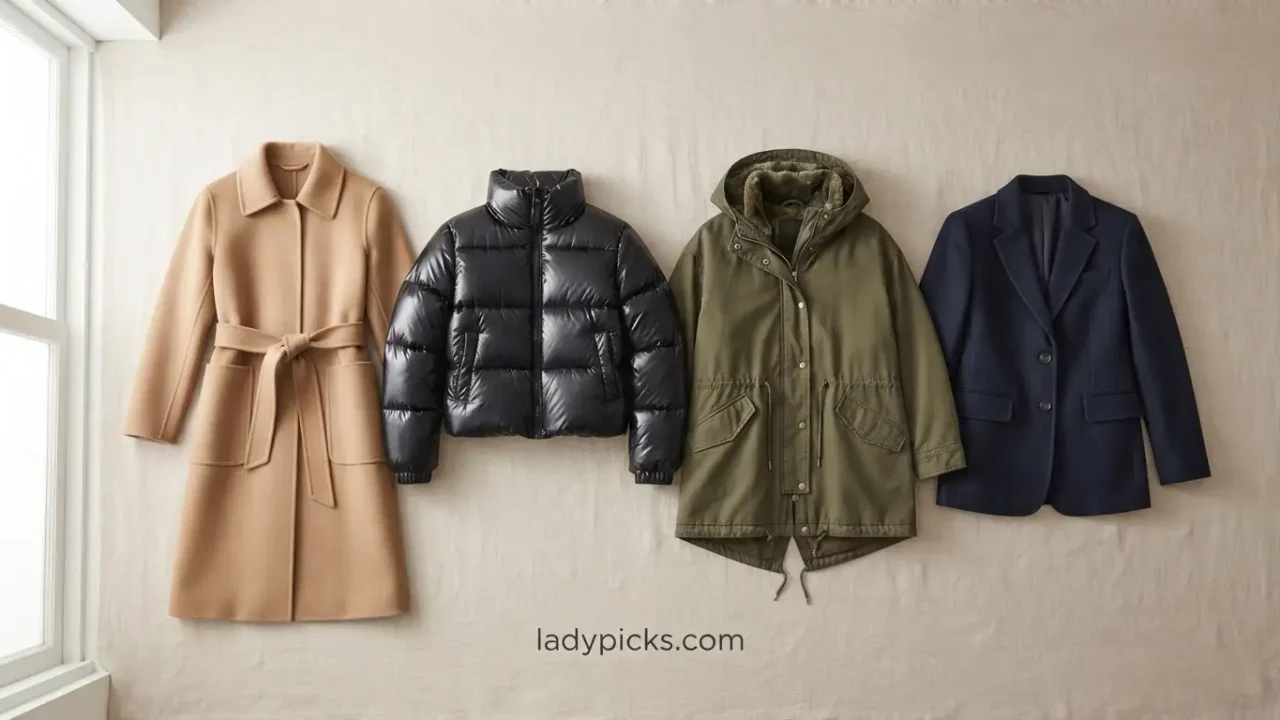
Two people can try on the same jacket and walk away with completely different verdicts. One feels sharp and comfortable, the other feels boxy, restricted, or just slightly off. Neither of them is wrong, and the jacket isn’t necessarily bad. Outerwear sits over everything else you’re wearing, so how it falls on your particular proportions matters a great deal. This guide looks at jackets, parkas, puffers, vests, and rain shells, and how each one tends to behave on different body types, so you can shop with a plan instead of guessing.
In this guide
- Think in Proportions, Not Labels
- Start With Shoulders and Sleeves
- Torso Length and Hem Placement
- Puffers and Padded Jackets
- Parkas and Longer Outerwear
- Vests and Lightweight Layers
- Rain Jackets and Shells
- Test the Fit With Real Movement
- Don't Ignore Quality While You Focus on Fit
- Get More Out of the Jacket You Choose
- Final Thoughts
Think in Proportions, Not Labels
It’s tempting to sort yourself into a single body type and follow a fixed list of dos and don’ts. In practice, most people are a mix, and what matters more is a few specific proportions: how wide your shoulders are compared with your hips, how long your torso is relative to your legs, and how much room you want for layers underneath. Looking at those three things gives you more useful information than a single label does.
If you want a general reference for how body proportions are described, this overview of body proportions is a helpful starting point. For long coats in particular, our guide on choosing the right coat for your body type goes deeper into specific shapes.
Start With Shoulders and Sleeves
The shoulder seam is the one fit detail that’s hard to alter later, so it deserves your attention first. On most jackets, the seam should sit near the edge of your shoulder bone. If it droops down your arm, the jacket is too big in the frame. If it rides up toward your neck or the fabric pulls across your upper back, it’s too small.
Sleeve length is the next check. With your arms relaxed, the cuff should reach the base of your thumb or just past your wrist bone, and it should still cover your wrist when you reach forward. If you wear gloves in winter, try the jacket with them on to make sure the cuffs aren’t too tight.
Torso Length and Hem Placement
Where a jacket ends changes how your whole outfit reads. If you have a longer torso and shorter legs, a jacket that ends at the hip or slightly below tends to feel balanced, because it doesn’t cut your legs short. If you have a shorter torso and longer legs, you have more freedom: cropped jackets, waist-length styles, and mid-thigh parkas all tend to work well.
A useful trick is to look at where the hem lands relative to the widest part of your body. A hem that stops exactly at that point can draw the eye there. Moving it a few inches higher or lower often looks more deliberate.
Puffers and Padded Jackets
Padded jackets add volume by design, so placement of the quilting lines matters. Horizontal baffles, the wide rows of quilting that run across the body, make a jacket look wider. Narrower or vertical channels tend to look slimmer, and a puffer with a defined waist or an adjustable hem can keep the shape from feeling shapeless. If you’re curious about how these jackets are built, this overview of puffer jackets explains the construction.
Fit across the chest and arms is especially important in a puffer, because the padding limits movement if it’s cut too tight. Raise your arms and reach forward in the fitting room. If the whole jacket rides up or your arms feel pinned, try the next size up.
Parkas and Longer Outerwear
Parkas and long utility jackets give you more coverage and warmth, but they can overwhelm a smaller frame. If you’re petite, look for a parka that ends around mid-thigh rather than the knee, and one with a waist drawcord to bring in the shape. If you’re tall, longer lengths tend to look natural and give you more of the coverage you may struggle to find in standard cuts.
For anyone, hoods matter more than people think. A hood that’s too large can flop and add visual bulk at the neck, while one with an adjustable drawcord keeps things neat.
Vests and Lightweight Layers
Insulated vests are a smart addition for many body types, because they keep your core warm without adding bulk around your arms. They’re a good choice if you run warm or if you find sleeves restrictive. A vest in a slightly fitted cut sits neatly over a sweater and works well as a mid layer under a shell. Our guide to building the perfect outerwear wardrobe with a layering system explains how vests fit into the bigger picture.
Rain Jackets and Shells
Shell jackets are often cut generously to leave room for layers. That’s useful, but too much extra fabric can flap in the wind and look unflattering. Look for adjustable hems, cuffs, and waist cords, which let you customize the fit. Because shells are usually worn over other layers, try them on over the thickest layer you expect to wear.
Test the Fit With Real Movement
Standing still in front of a mirror only tells you part of the story. Move around in the jacket before you decide. Reach forward as if you’re driving or typing, lift your arms overhead, and sit down. The jacket should move with you without pulling across the back, riding up, or squeezing your upper arms.
Bring or wear the layers you’ll actually use underneath. A jacket that fits perfectly over a thin shirt can feel tight once you add a sweater, so it’s worth testing the combination that matters most to you.
Don’t Ignore Quality While You Focus on Fit
A great fit in a poorly made jacket won’t last. Once you’ve found a style that suits your proportions, check the stitching, lining, and hardware as well. Our checklist on how to spot a high-quality coat before you buy covers the details worth inspecting.
Get More Out of the Jacket You Choose
Once you’ve found outerwear that fits well, a few styling changes can stretch it across many outfits. Belting, unbuttoning, or swapping scarves and accessories can shift the whole look, and our guide on styling one coat five different ways has practical examples.
Final Thoughts
Choosing outerwear for your body type comes down to paying attention to a few practical details: where the shoulder seam sits, how long the sleeves and hem are, how much room you need for layers, and whether you can move comfortably. Different styles, from puffers to parkas to shells, each have strengths and quirks, and knowing them helps you pick the one that suits your proportions and your climate. Try things on with movement, wear the layers you’ll really use, and trust how a jacket feels as much as how it looks.